Table of Content
- Why is a Psychology Lab Important?
- Key Steps to Set Up a Psychology Lab
- Common Psychology Laboratory Experiments
- Final Thoughts
A psychology lab plays a crucial role in helping students understand human behaviour, cognition, emotions, and mental processes through practical learning. While psychology is often viewed as a theoretical subject, laboratory-based learning provides students with real-world exposure to observation, testing, and behavioural analysis.
Whether you are planning a psychology department for a school, college, or university, setting up a well-equipped can significantly improve the learning experience.
Why Is a Psychology Lab Important?
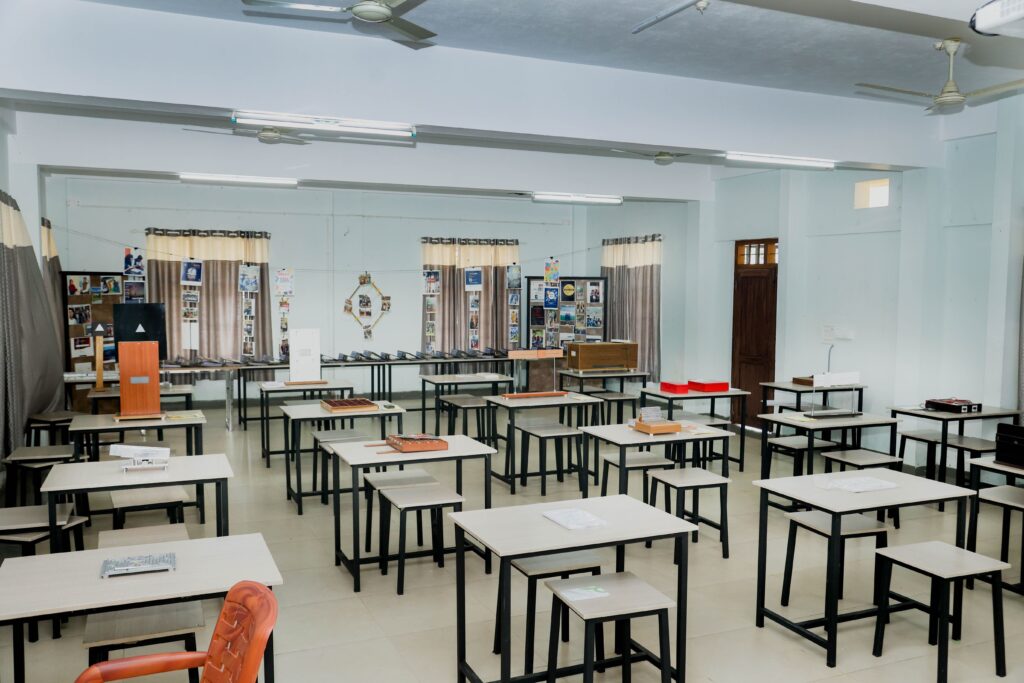
A psychology lab helps students perform experiments, conduct observations, and understand psychological theories through practical demonstrations. However, instead of learning concepts only from textbooks, students can participate in a psychology laboratory experiment to better understand memory, perception, intelligence, attention span, learning behaviour, and emotional responses.
Practical exposure in psychology also encourages research-based thinking, critical analysis, and scientific observation. This is particularly useful for institutions offering undergraduate or postgraduate psychology courses.
Key Steps to Set Up a Psychology Lab
1. Choose the Right Space
The first step in setting up a psychology lab is selecting an appropriate room with adequate space, lighting, ventilation, and minimal distractions. Furthermore, many psychology experiments require concentration and observation; the environment should be calm and controlled.
Furthermore, a separate section can also be allocated for counselling activities, testing, and group experiments.
2. Invest in Essential Psychology Lab Equipment
A properly equipped psychology lab should include tools and instruments for observation, testing, and experimentation. Some commonly used items include:
- Intelligence testing kits
- Memory and learning apparatus
- Reaction time equipment
- Personality assessment tools
- Cognitive skill testing devices
- Perception experiment kits
- Behavioral observation materials
- Psychological testing charts and models
Additionally, cognitive skill-testing devices, perception experiment kits, behavioural observation materials, and psychological testing charts enable learners to study human behaviour, emotions, and mental processes more effectively. By using these resources, students can actively participate in a psychology laboratory experiment, bridging the gap between theoretical knowledge and practical understanding while developing analytical and research skills.
3. Include Comfortable Furniture and Workstations
A psychology lab requires organized seating arrangements for both individual and group activities. Comfortable desks, chairs, storage cabinets, and testing stations help maintain a productive learning environment. Institutions may also include digital workstations for computerized psychological assessments.
4. Ensure Research and Observation Facilities
Modern psychology education increasingly depends on observation and data analysis. A well-designed psychology lab should therefore include audio-visual aids, computers, projectors, and software for conducting psychological tests and analyzing behavioral data.
Observation rooms with one-way mirrors or recording systems can also be useful for advanced institutions conducting behavioral studies.
5. Focus on Safety and Ethics
Ethics are an important aspect of psychology experiments. Students should be trained to maintain confidentiality, obtain consent, and conduct tests responsibly. Institutions must also ensure that experiments are safe and emotionally appropriate for participants.
Common Psychology Laboratory Experiments
A psychology laboratory experiment allows students to practically understand mental and behavioral processes. Some common experiments include:
- Memory retention tests
- Learning and conditioning experiments
- Attention and concentration studies
- Reaction time measurement
- Perception and illusion experiments
- Intelligence and aptitude assessments
These experiments help bridge the gap between theoretical concepts and practical understanding.
Final Thought
Setting up a psychology lab requires thoughtful planning, the right equipment, and a structured environment for observation and experimentation. From understanding the history of psychology to creating spaces for modern research, institutions can build laboratories that encourage experiential learning and scientific thinking.
As education continues to expand in schools and universities, investing in a fully equipped science lab can help students gain deeper insights into human behaviour, mental processes, and research methodologies.



Leave a Reply