Table of Content
- Designing the Lab Before Defining Its Actual Work
- Mixing Pre-PCR and Post-PCR Areas in a Biotechnology Lab Setup
- Inappropriate Placement of Biosafety Cabinets in a Biotechnology Lab Setup
- Choosing Furniture Before Equipment in a Biotechnology Lab Setup
- Ignoring Workflow During Planning the Lab Setup
- Poor Storage Requirements in a Biotechnology Lab Setup
- Ignoring Future Expansion in the Biotechnology Lab
- Conclusion
Ever wondered if you started to plan future biotechnology lab setup and find out there’s no full-proof plan and layout for building a well-organized laboratory? A biotechnology Lab often handles biological samples, reagents, cultures, molecular biology procedures and temperature-sensitive materials. Therefore, the laboratory layout must support safe movement, contamination control, efficient workflows, and future equipment requirements.
Without proper planning, a laboratory may appear functional at the beginning, but gradually devolap problems such as cross-contamination, overcrowded work areas, unsafe sample movement, and costly modifications. Therefore, in this blog, we are discussing 7 common mistakes to avoid while planning to build to a biotechnology lab setup with an appropriate solution.
1. Designing the Lab Before Defining Its Actual Work
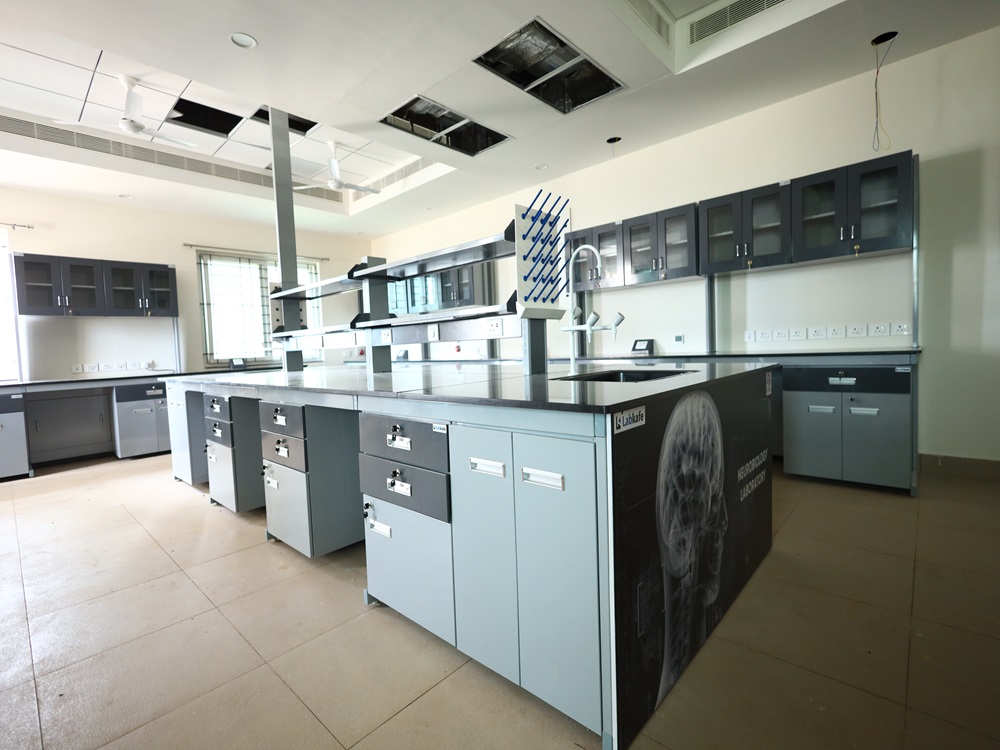
One of the most mistake that happens in a Biotechnology Lab setup is designing the laboratory before planning, the proper placement of the specific workstations. Different biotechnology laboratories may handle PCR testing, cell culture, microbiology, molecular biology, protein analysis, or academic research, and each activity requires a different layout, level of containment, equipment plan, and workflow.
Before finalizing the laboratory design, identify the type of experiments, number of users, samples to be handled, required instruments, biosafety needs, storage requirements, and utility points. Once these requirements are clear, you can divide the laboratory into dedicated functional zones and avoid unnecessary redesign or expensive modifications later.
2. Mixing Pre-PCR and Post-PCR Areas in a Biotechnology Lab Setup
In Biotechnology Lab, one of the most critical mistakes is placing pre-PCR and Post-PCR on the same workstation. Setting it up near each other causes amplified DNA spread through pipette, or falcon tubes. This contamination may affect clean reagents and fresh samples, increase the risk of false-positive results and reduce the reliability of molecular testing.
Moreover, pre-PCR areas are used for clean procedures such as reagent preparation, master-mix preparation, DNA or RNA extraction, and sample handling. Post-PCR areas, on the other hand, contain amplified genetic material in very high concentrations. However, to avoid this problem, divide the PCR workflow into clearly defined zones for reagent preparation, sample preparation, amplification, and post-PCR analysis.
Each zone should also have dedicated pipettes, PPE, consumables, and storage wherever required. Proper zoning in a Biotechnology lab setup not only reduces contamination risk but also makes the laboratory workflow more organized, reliable, and easier to manage over time.
3. Inappropriate Placement of Biosafety Cabinets in a Biotechnology Lab Setup
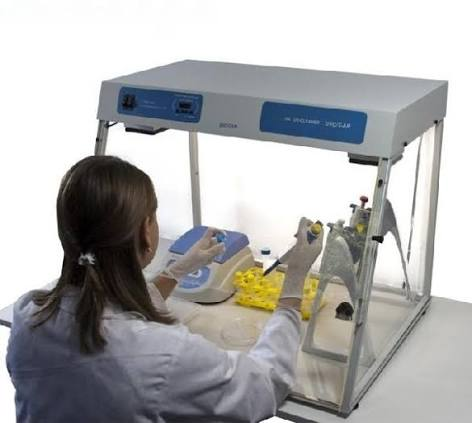
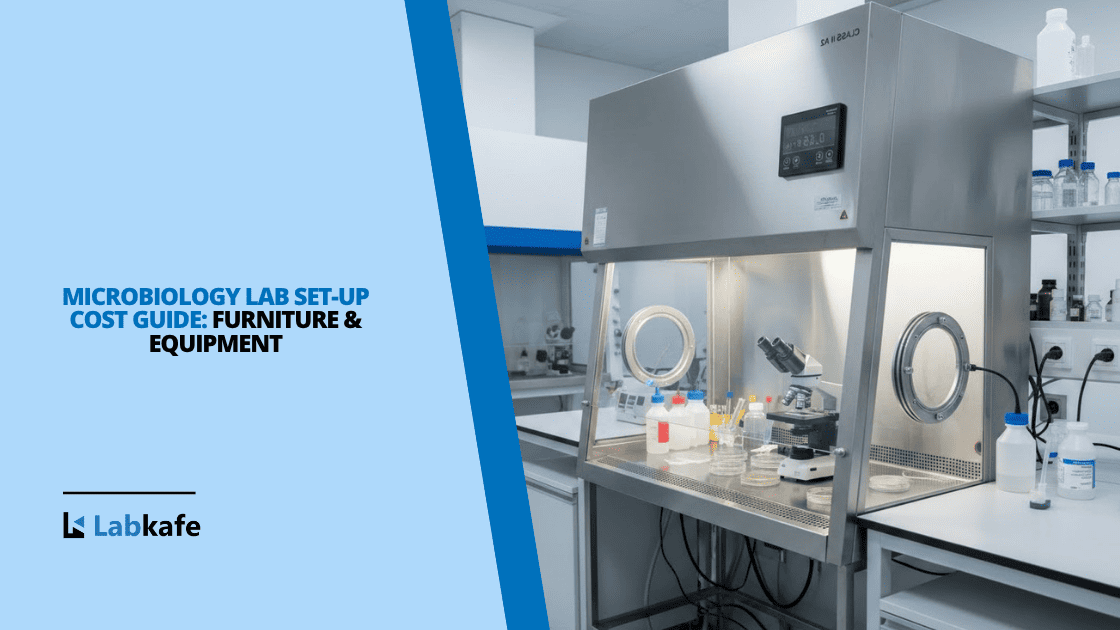
Wrong placement of a biosafety cabinet comprises their laminar airflow, allowing airborne contaminants to pass through the lab or enter the work zones. A biosafety cabinet helps to protect the user, the samples and the surrounding environment. However, if it installed near the door, windows, or air-conditioning vents, the air pattern of the biosafety cabinet is disrupted.
Improper placement can increase the risk of contamination and may also reduce the effectiveness of the cabinet during sensitive biological procedures. Frequent movement of people behind the operator can further disrupt airflow and make the working area uncomfortable.
To avoid this issue, place the biosafety cabinet in a low-traffic zone away from direct drafts and frequently opened doors. The cabinet should also have enough surrounding clearance for operation, cleaning, maintenance, and servicing.
4. Choosing Furniture Before Equipment in a Biotechnology Lab Setup
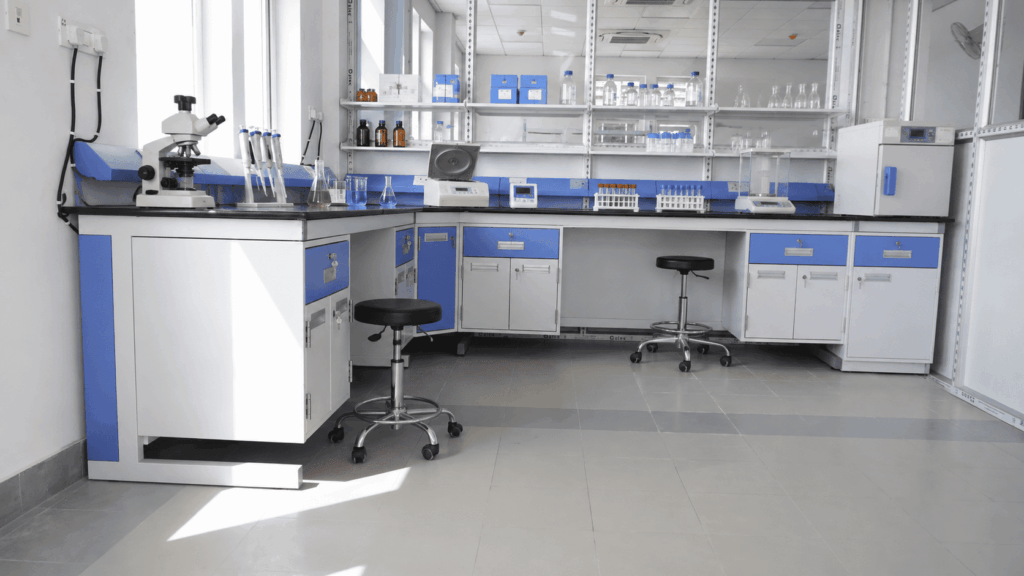
Laboratory furniture should never be finalized independently of the equipment plan. Biotechnology laboratories may contain centrifuges, PCR machines, spectrophotometers, electrophoresis systems, incubators, refrigerators, deep freezers, autoclaves, microscopes, water baths, balances, and many other instruments.
Each instrument may require different:
- Lab Workbench dimensions
- Load-bearing capacity
- Electrical points
- Ventilation
- Clearance
- Utility connections
This is where Labkafe can help in planning the right furniture and laboratory layout. Based on the available space, equipment list, number of users, workflow, and utility requirements, Labkafe’s lab expert can help design suitable workbench configurations, storage solutions, equipment locations, and service points for the laboratory.
By planning the equipment and furniture together, Labkafe helps create a Biotechnology lab setup that uses space efficiently, supports safe working conditions, and reduces the need for costly changes after installation.
5. Ignoring Workflow During Planning the Lab Setup
A laboratory may have excellent furniture and equipment while still suffering from an inefficient workflow. Researchers continuously move samples, chemicals, glassware, consumables, waste, and biological materials between different workstations. If these movements cross unnecessarily, they can increase contamination risks and slow down laboratory operations.
A better Biotechnology lab setup creates a logical flow such as:
Material Entry → Preparation → Biological Handling → Testing/Analysis → Storage → Decontamination
Frequently connected activities should remain close to each other. furthermore, the sample preparation should have convenient access to centrifugation and analytical workstations, while washing and decontamination activities should remain appropriately separated from clean preparation zones.
6. Poor Storage Requirements in a Biotechnology Lab Setup
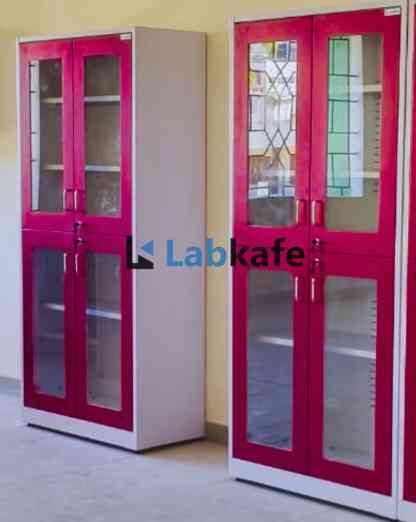
Storage is often a secondary observant while planning any lab, but it plays a vital role in keeping the laboratory organized, safe, and efficient. However, biotechnology lab may need separate storage for reagents, chemicals, glassware, and consumables. In case the storage capacity is not planned properly, workbenches can quickly become overcrowded with the leftovers of the laboratory.
To avoid this problem, storage requirements should be identified during the initial planning stage of the project. Depending on the laboratory, the setup may include Overhead Cabinet, Full height cabinet, Reagent Racks, Sample Storage Units and other Storage cabinets.
Proper storage planning in a Biotechnology lab setup helps keep work surfaces clear, reduces unnecessary movement, improves accessibility, and supports better laboratory organization.
7. Ignoring Future Expansion in the Biotechnology Lab
Another common mistake while planning a Biotechnology lab setup is designing the laboratory only for current requirements. Biotechnology laboratories often evolve with new research projects, additional users, new instruments, and increased sample storage. If the laboratory is planned without considering future growth, adding new equipment later can lead to overcrowding, insufficient electrical capacity, limited storage, and expensive modifications.
To avoid this problem, the laboratory should be designed with flexibility in mind. Modular workbenches, spare electrical points, accessible utility lines, additional storage capacity, and reserved space for future instruments can make expansion much easier. Planning for growth from the beginning allows the laboratory to adapt to changing research needs without disrupting existing operations.
Conclusion
A well-planned Biotechnology lab setup should support safe workflow, contamination control, proper equipment placement, organized storage, and future expansion. Avoiding common planning mistakes from the beginning can help reduce costly modifications and create a more efficient laboratory.
Labkafe can help you plan and build a complete Biotechnology lab setup with customized layouts, modular lab furniture, utility planning, storage solutions, and equipment placement. Connect with Labkafe to create a biotechnology laboratory designed around your space, workflow, and application needs.




Leave a Reply