Science becomes truly meaningful when students can see, touch, and experience concepts beyond textbooks.
However, for many rural schools across India, access to proper laboratory infrastructure still remains a major challenge. Limited resources, space constraints, and budget limitations often prevent students from experiencing practical science learning.
To bridge this gap, Labkafe successfully designed and installed a Mini Science Lab in Jharkhand at Kasturba Gandhi Balika Vidyalaya (KGBV), Pakur — a project focused on empowering underprivileged girls through accessible and engaging science education.
This initiative was not simply about setting up laboratory equipment.
It was about creating opportunities, curiosity, and confidence among students who deserve equal access to quality education.
About Kasturba Gandhi Balika Vidyalaya (KGBV), Pakur
Kasturba Gandhi Balika Vidyalaya is a government-funded residential school dedicated to providing quality education to underprivileged girls in rural Jharkhand.
Located in the heartland of Pakur, the school has continuously worked toward improving educational accessibility for students despite infrastructural and financial limitations.
Like many rural institutions, the school faced challenges in providing students with advanced practical learning environments. While theoretical education remained strong, the absence of a proper hands-on laboratory experience created a gap in science learning.
This is where the idea of setting up a Mini Science Lab in Jharkhand became highly impactful.
Why Mini Science Labs are Important for Rural Schools
In many schools across rural India, practical science education often becomes limited due to:
- lack of dedicated laboratory spaces,
- insufficient funding,
- limited access to scientific equipment,
- and infrastructure challenges.
As a result, students are forced to learn science only theoretically.
A Mini Science Lab in Jharkhand like the one installed at KGBV Pakur helps solve this problem by making science learning accessible, interactive, affordable, and engaging. Instead of waiting for occasional lab access, students can now experience science directly inside their learning environment.
Key Benefits of the Mini Science Lab at KGBV Pakur
1. Improved Teaching Convenience
Traditional laboratories often require students to move between classrooms and lab spaces, consuming time and creating logistical challenges.
With the mini science lab setup, teachers can now conduct practical demonstrations directly within the classroom environment.
This flexibility helps:
- save instructional time,
- integrate experiments into daily lessons,
- and improve concept clarity during teaching sessions.
Teachers can now explain scientific concepts more effectively using real equipment instead of relying only on textbook diagrams.
2. Cost-Effective Science Laboratory Solution
One of the biggest advantages of a Mini Science Lab in Jharkhand is affordability.
Building a full-scale laboratory often requires:
- dedicated infrastructure,
- specialized construction,
- expensive utilities,
- and higher maintenance costs.
Mini science labs eliminate many of these barriers.
By utilizing compact designs and essential multi-purpose equipment, schools can significantly reduce:
- setup expenses,
- maintenance requirements,
- and space dependency.
This makes mini science labs an ideal solution for government schools, rural institutions, and budget-conscious educational setups.
3. Better Student Engagement Through Practical Learning
The introduction of the mini science lab completely transformed student excitement toward science learning.
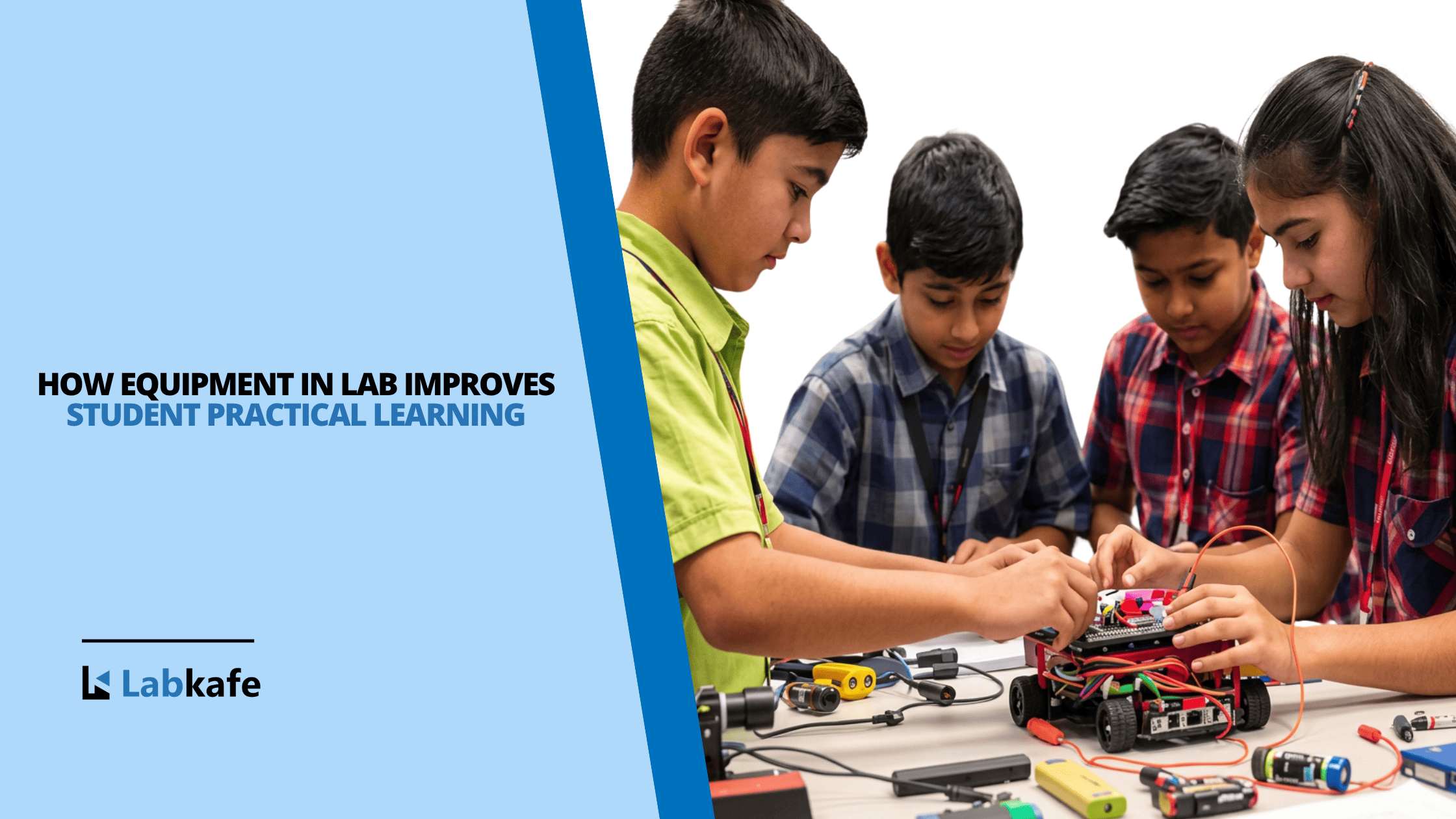
For many students at KGBV Pakur, this was their first opportunity to interact directly with microscopes, scientific models, laboratory instruments, and hands-on experiments.The setup immediately sparked curiosity among students.
Instead of simply memorizing concepts, students became eager to observe experiments, participate actively, ask questions, and explore scientific concepts independently.
Practical learning suddenly became enjoyable, interactive, and memorable.
4. Accessibility and Ease of Learning
One of the most powerful aspects of the mini science lab is accessibility.
Since the laboratory setup is integrated within the learning environment itself, students gain more frequent exposure to experiments instead of waiting for occasional practical sessions.
This helps students:
- understand concepts faster,
- improve retention,
- build confidence in science subjects,
- and develop analytical thinking skills.
The hands-on learning environment also creates a stronger connection between theoretical concepts and real-world applications.
5. Multi-Disciplinary Learning Experience
The mini science lab installed by Labkafe was designed to support multiple scientific disciplines.
The setup enables students to perform activities related to:
- Biology
- Chemistry
- Physics
- Environmental Science
This interdisciplinary approach encourages students to explore science more holistically instead of treating subjects separately.
It also helps teachers create more engaging and activity-based classroom experiences.
The Response from Teachers and Students
The reaction from both teachers and students at KGBV Pakur was overwhelmingly positive.
Teachers were especially excited to see the wide variety of teaching aids and practical tools available inside the setup. From microscopes to scientific models, the lab provided resources that could significantly improve classroom explanation and student understanding.
According to teachers, the mini science lab would:
- simplify concept explanation,
- improve classroom interaction,
- and make science sessions more engaging than ever before.
The students were equally fascinated.
The laboratory setup created visible excitement among them, and many students expressed eagerness to participate in practical sessions for the very first time.
For these students, science was no longer limited to textbook theory.
It became something they could experience directly.
Educational Impact of the Mini Science Lab in Jharkhand
The Mini Science Lab in Jharkhand project at KGBV Pakur represents much more than a laboratory installation.
It represents:
- educational accessibility,
- equal learning opportunities,
- and empowerment through practical education.
By creating an engaging science learning environment, the project is helping:
- improve student confidence,
- strengthen scientific understanding,
- encourage curiosity,
- and enhance classroom participation.
Most importantly, it is helping bridge the gap between rural education and modern experiential learning practices.
How Mini Science Labs are Shaping the Future of Rural Science Education?
Across India, educational institutions are gradually realizing that practical learning plays a critical role in student development.
Mini science labs are emerging as an effective solution because they:
- Require less infrastructure
- Improve practical exposure
- Increase student participation
- Make science learning more interactive
For schools operating under resource limitations, these setups create an opportunity to provide quality science education without the burden of large-scale laboratory investments.
This makes Mini Science Labs especially valuable for:
- Rural schools
- Government institutions
- Residential schools
- Schools focused on inclusive education
FAQs
A mini science lab is a compact and cost-effective laboratory setup designed for schools with limited space or infrastructure. It includes essential scientific instruments and models that allow students to perform practical experiments in subjects like Physics, Chemistry, and Biology directly inside the classroom environment.
A mini science lab helps schools improve practical learning without requiring a large laboratory setup. It allows teachers to conduct hands-on experiments more conveniently, increases student engagement, and helps students understand scientific concepts better through real-life observation and activities.
Mini science labs are especially important for rural schools because they provide affordable access to practical science education. Many rural institutions face budget and infrastructure limitations, making full-scale laboratories difficult to establish. Mini science labs help bridge this gap by making science learning more interactive, accessible, and engaging for students.
One of the biggest advantages of a mini science lab is that it requires very little space. These labs can be easily set up inside a standard classroom without the need for a separate laboratory room. Their compact and flexible design makes them ideal for schools with limited infrastructure.
Government schools should invest in mini science labs because they enhance the quality of science education while remaining budget-friendly. These labs encourage hands-on learning, improve student participation, and help students develop a deeper understanding of scientific concepts. They also create equal learning opportunities for students studying in resource-constrained educational environments.









Leave a Reply