Table of Contents
- The Importance of Practical Learning in Science Education
- How Lab Equipment Enhances Student Understanding
- How Lab Equipment Bridges the Gap Between Theory and Practice
- How Chemistry Lab Instruments Improve Experiment Accuracy
- Encouraging Scientific Curiosity Through Biology Lab Equipment
- Developing Physics Concepts Through Laboratory Experiments
- Preparing Students for Higher Education and Research Careers
- Conclusion
Science is best understood when students can see, touch, measure, and experiment with concepts rather than simply reading about them. Studies consistently show that hands-on laboratory experiences improve knowledge retention, analytical thinking, and scientific reasoning. This is why investing in the right Equipment in Lab environments is essential for schools, colleges, and research institutions.
From chemistry lab instruments that teach precision to biology lab equipment that encourages exploration and dry- and wet-lab furniture that supports collaborative learning, every element of a laboratory contributes to a student’s practical education.
The Importance of Practical Learning in Science Education
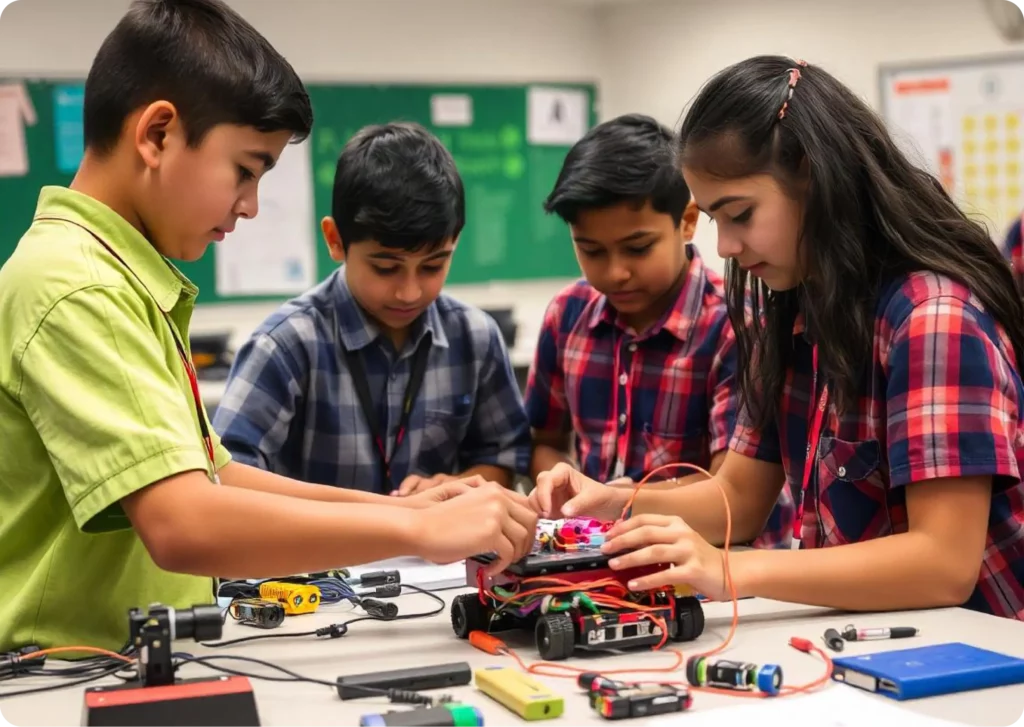
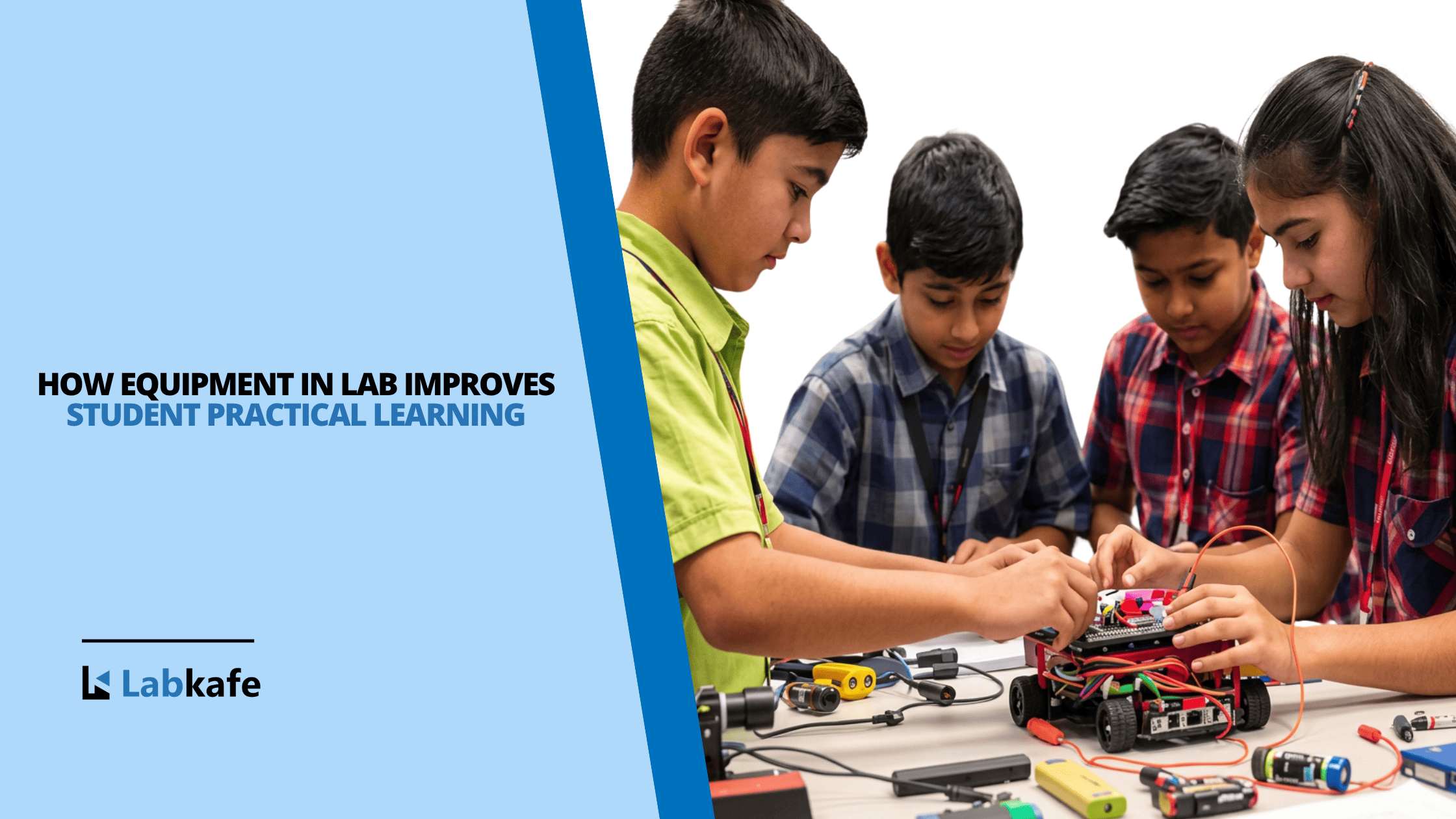
Modern science curricula emphasize experiential learning because students retain concepts better when they actively participate in experiments. Practical sessions transform abstract theories into observable phenomena. For example, a student may understand the concept of density from a textbook, but performing a density experiment using laboratory apparatus creates a deeper and longer-lasting understanding.
Well-equipped laboratories also cater to different learning styles. Visual learners benefit from demonstrations, kinesthetic learners engage through hands-on experimentation, and analytical learners develop problem-solving abilities through data interpretation. This makes Equipment in Lab facilities an indispensable part of science education.
How Lab Equipment Enhances Student Understanding
The effectiveness of practical learning depends heavily on the quality and availability of laboratory equipment. When students use properly calibrated instruments, they can collect accurate data and observe scientific principles in real time. Furthermore, for instance, the instruments such as:
- Digital balances help students understand mass measurement and precision.
- Microscopes reveal cellular structures that cannot be visualized through textbooks.
- Measuring cylinders and burettes demonstrate volume calculations and experimental accuracy.
- Data logging devices help students interpret scientific data more effectively.
By interacting directly with these instruments, students gain a stronger conceptual understanding than classroom instruction alone can provide.
How Lab Equipment Bridges the Gap Between Theory and Practice
Understanding scientific concepts through textbooks is important, but students gain deeper knowledge when they can apply those concepts through hands-on experimentation. The right Equipment in Lab environment helps transform theoretical lessons into practical experiences, making science more engaging and meaningful. Laboratory equipment bridges the gap between theory and practice by:
- Turning concepts into observable phenomena – Students can witness scientific principles in action instead of merely reading about them in textbooks.
- Providing hands-on learning opportunities – Instruments such as microscopes, balances, and measuring devices allow students to actively participate in experiments and reinforce classroom lessons.
- Helping students verify scientific theories – By conducting experiments and analyzing results, learners understand how scientific knowledge is tested and validated.
- Demonstrating real-world applications of science – Laboratory activities show how scientific concepts are applied in fields such as healthcare, pharmaceuticals, engineering, and environmental research.
- Improving understanding through experiential learning – Students retain information better when they perform experiments and observe outcomes firsthand.
- Teaching the importance of accuracy and precision – Working with laboratory instruments helps students appreciate how proper measurements influence experimental results.
- Developing practical laboratory skills – Students learn essential techniques such as observation, data collection, measurement, and result interpretation.
How Chemistry Lab Instruments Improve Experiment Accuracy
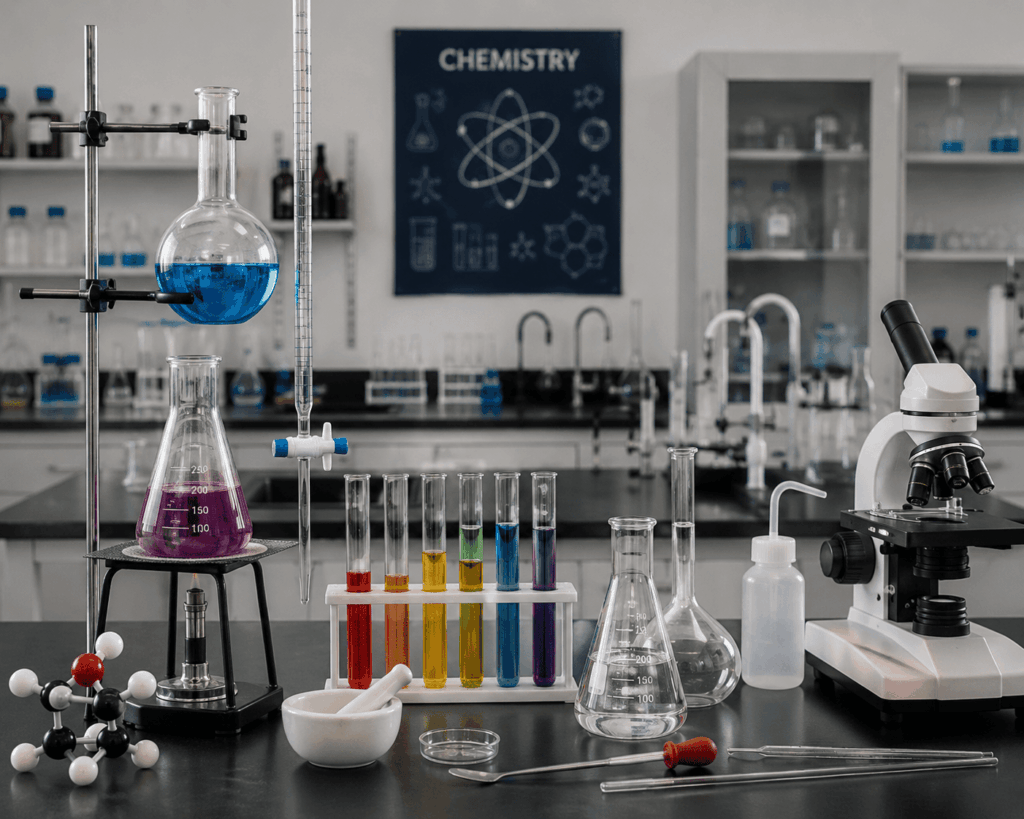
Accuracy is one of the most valuable lessons students learn in a science laboratory. Modern chemistry lab instruments help students understand the importance of precise measurements and reproducible results.
Essential chemistry instruments include:
- Analytical balances
- pH meters
- Spectrophotometers
- Burettes
- Pipettes
- Hot plates and magnetic stirrers
Using these instruments teaches students proper laboratory techniques while minimizing experimental errors. Students learn that even small measurement deviations can significantly affect outcomes, an important lesson for future scientific research and industrial applications.
Encouraging Scientific Curiosity Through Biology Lab Equipment
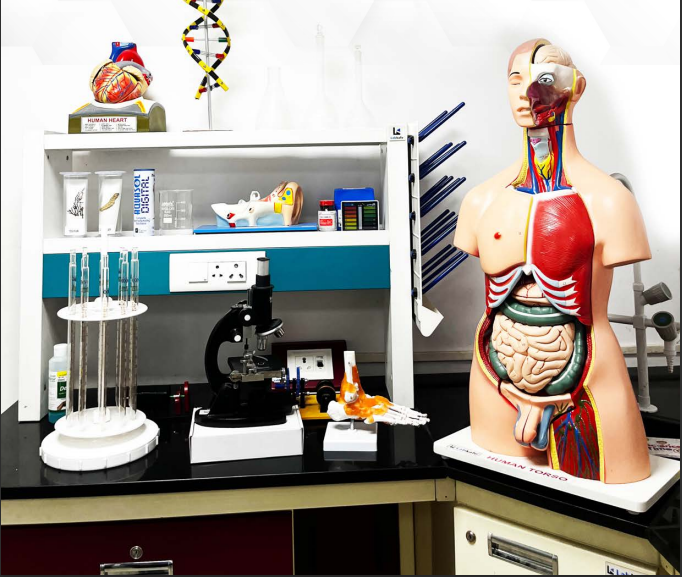
Curiosity is the foundation of scientific discovery. Biology lab equipment helps transform curiosity into exploration by allowing students to investigate living systems firsthand.
Microscopes, prepared slides, incubators, specimen models, and dissection kits provide opportunities to observe structures and processes that are otherwise invisible. Students can examine plant tissues, identify microorganisms, and study cellular behaviour, turning theoretical biology lessons into engaging investigative experiences.
These activities foster inquiry-based learning, encouraging students to ask questions, form hypotheses, and seek evidence-based answers.
Developing Physics Concepts Through Laboratory Experiments
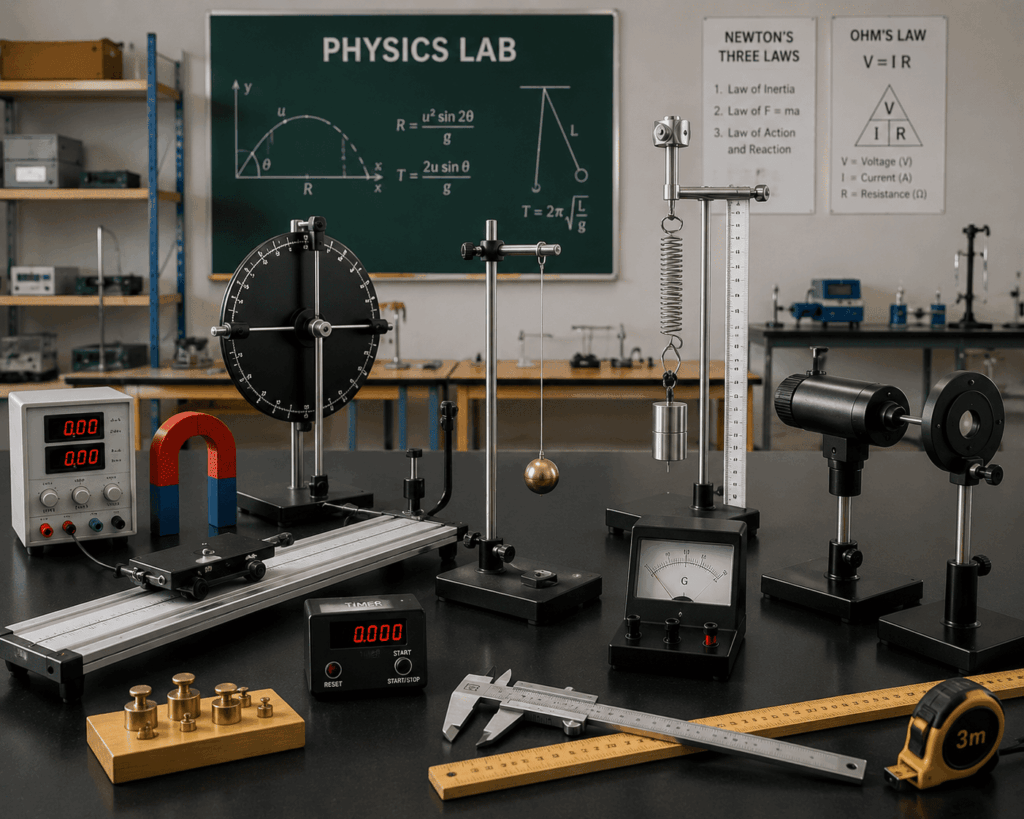
Physics concepts become easier to understand when students can observe and measure them firsthand. Laboratory experiments help transform theoretical principles into tangible experiences, allowing students to see how forces, motion, electricity, light, and energy behave in real-world situations.
Equipment such as pendulums, spring balances, voltmeters, ammeters, optical benches, and mechanics apparatus enables students to investigate physical phenomena through direct observation and experimentation. They can calculate acceleration, verify laws of motion, study electrical circuits, and explore the properties of light, turning complex formulas into meaningful learning experiences.
These practical activities encourage analytical thinking, data interpretation, and problem-solving skills. By testing theories and evaluating results, students develop a deeper understanding of physics concepts while building the scientific mindset needed for advanced study and research.
Preparing Students for Higher Education and Research Careers
Universities and research organizations expect students to possess practical laboratory skills before entering advanced academic programs. Early exposure to professional-grade laboratory environments helps students become familiar with scientific protocols, laboratory safety standards, and equipment handling procedures.
Students who regularly work with advanced Equipment in Lab settings develop competencies that prepare them for careers in biotechnology, pharmaceuticals, healthcare, environmental science, engineering, and research.
Beyond technical skills, laboratory experiences cultivate discipline, teamwork, and scientific ethics, qualities that are highly valued in both higher education and industry.
Conclusion
A laboratory is much more than a room filled with instruments; it is a space where scientific understanding is transformed into practical knowledge. The right Equipment in a lab environment enables students to apply theories, improve accuracy, develop critical-thinking skills, and cultivate scientific curiosity. Combined with advanced chemistry lab instruments, innovative biology lab equipment, and well-designed dry lab furniture, modern laboratories create meaningful learning experiences that prepare students for academic excellence and future careers in science and research.
Looking to build a future-ready science laboratory for your school, college, or research institution? Invest in high-quality lab equipment and laboratory furniture solutions that enhance practical learning and inspire the next generation of innovators.






Leave a Reply