Table of Content
- What is a Composite Science Lab?
- Establishing of Composite Science Lab
- Guidelines to build a Composite Science Lab
- Why are CBSE & ICSE Schools Moving Towards Composite Science Lab?
- Essential Components of Modern Composite Science Lab
- Conclusion
Science education is no longer limited to textbook learning and theoretical concepts. Today, schools are focusing on practical learning experiences that encourage experimentation and innovation. As a result, many CBSE and ICSE institutions are gradually shifting towards the Composite Science Lab to improve learning outcomes while reducing and optimizing the resources.
Moreover, schools maintained separate labs for Physics, Chemistry, and Biology. However, increasing infrastructure costs, space limitations, and the need for interdisciplinary education have encouraged schools to adopt a smarter and more efficient laboratory setup. Thus, an Integrated Science Lab helps schools to combine multiple disciplines within one organized and functional space.
What is a Composite Science Lab?
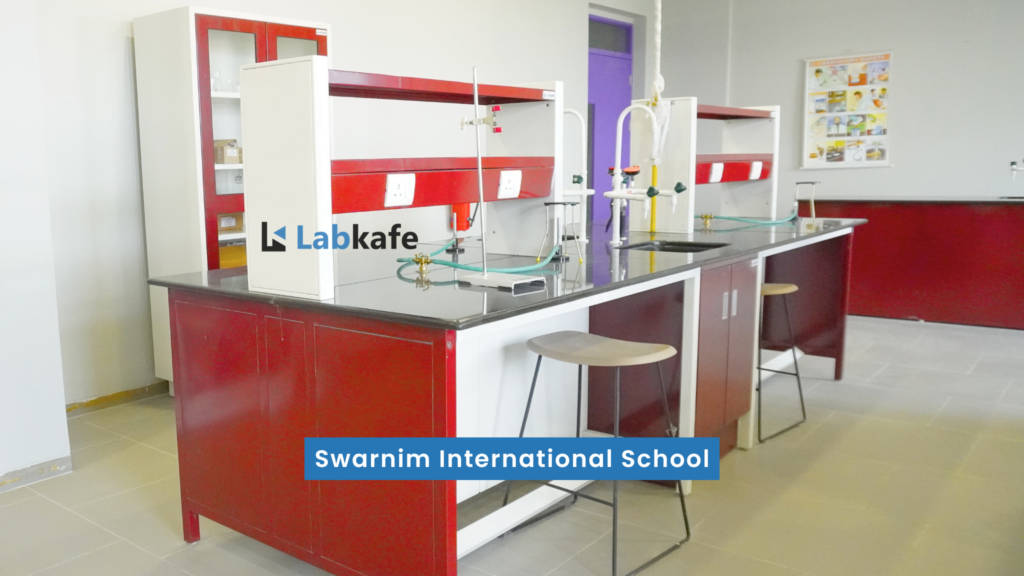
A Composite Science lab is a centralised laboratory built in schools where the students can perform practical activities related to core subjects. Instead of maintaining separate science rooms, schools establish a composite laboratory that supports multiple scientific disciplines under one roof.
This setup is particularly beneficial for middle and secondary schools, where students require practical demonstrations across different science subjects. A well-designed Integrated Science Lab is equipped with essential science lab apparatus, instruments, storage systems, and safety features that support comprehensive practical learning.
According to National Scholarship Portal (NEP), about only 2.7% of India’s workspace has received formal skills in India. Furthermore, the United States, Japan and South Japan significantly have increased rates.
Establishing of Composite Science Lab
The growing adoption of the science lab concept aligns with India’s changing education framework that prioritizes experiential and practical learning. Educational boards such as CBSE have increasingly emphasized skill-based learning environments to bridge the gap between theoretical education and practical understanding.
Impact of Composite Labs
- Help students to move beyond theoretical concepts by encouraging hands-on experiments, scientific observations, and real-world application.
- Aligning the current students with the industry needs and prepare students for various trades and vocations.
- Implement entrepreneurial skills and allow students to explore different career options beyond the early traditional choices
Financial Implementation
- Reduced Infrastructure Cost: One Integrated Science Lab minimizes the need for multiple separate labs.
- Lower Maintenance Expenses: Schools save on repairs, utilities, and lab management costs.
- Shared Resources: Common science lab apparatus and Lab Furniture reduce duplicate investments.
- Funding Support: Schools can seek support through CSR programs and educational grants.
- Long-Term Savings: A centralized Integrated Science Lab offers better cost efficiency over time.
Guidelines to build a Composite Science Lab
A well-planned composite laboratory should include enough working space for demonstrations, group activities, and student experiments. Schools can divide laboratory sections according to practical requirements for Physics, Biology, and Chemistry science lab activities.
Proper laboratory design must include:
- Adequate ventilation and lighting systems
- Safety measures such as first-aid kits, fire extinguishers, and chemical storage
- High-quality science lab apparatus for practical demonstrations
- Ergonomic and durable Lab Furniture for comfortable student learning
- Separate arrangements for dry lab furniture and wet lab furniture
A properly structured lab ensures efficient classroom management, organized storage, and a safer learning environment.
Why are CBSE & ICSE Schools Moving Towards Composite Science Lab?
Space Optimization of Normal Science Labs
The schools, particularly in urban areas, face space constraints and limited infrastructure. However, a Science Lab helps institutions efficiently utilise available space by combining Physics, Biology, and Chemistry science lab activities into one centralized laboratory. This allows schools to provide quality practical education without requiring multiple separate lab rooms.
Budget-Friendly Infrastructure of Composite Science Lab
Building and maintaining separate science laboratories often requires significant investment. However, a composite laboratory helps reduce construction, maintenance, and operational costs by enabling schools to share resources, equipment, and utilities.
Instead of investing in duplicate infrastructure, schools can focus on high-quality science lab apparatus, durable Lab Furniture, and improved safety measures to enhance the overall learning environment.
Encourages Interdisciplinary Learning
Science subjects are deeply interconnected, and modern education encourages students to understand concepts through a multidisciplinary approach. However, a well-designed Integrated Science Lab allows students to explore how Physics, Biology, and Chemistry work together in practical applications.
For example, environmental experiments may involve biological observation, chemical analysis, and physical measurements, making integrated learning more engaging and effective.
Enhanced Practical Learning Experience
Practical learning plays an essential role in developing scientific understanding. Schools with modern Composite Science Lab facilities provide students with more opportunities for experiments, demonstrations, and hands-on activities.
Essential Components of Modern Composite Science Lab
To ensure smooth functioning and effective learning, schools must equip their Integrated Science Lab with modern infrastructure and quality resources.
Some essential components include:
- Physics Lab Equipment: A modern Physics section in a Composite Science Lab should include essentials such as voltmeters, ammeters, optical benches, pendulum setups, spring balances, lenses, magnets, and electrical experiment kits. Properly designed dry lab furniture with spacious workstations helps students perform calculations, take measurements, and conduct electrical experiments safely.
- Chemistry Lab Equipment: The chemistry Physics Section includes laboratory glassware and chemical handling tools such as burettes, pipettes, test tubes, beakers, and safety equipment. Furthermore, high-quality wet lab furniture, chemical-resistant countertops, sinks, and storage cabinets are important to ensure safe handling of chemicals and smooth practical sessions.
- Biology Lab Equipment: The Biology Lab Equipment Section includes microscopes, prepared slides, specimen jars, anatomical models, charts, dissection kits, and observation tools.
Conclusion
The growing shift toward a Composite Science Lab reflects how CBSE and ICSE schools are rethinking science education to make learning more practical, cost-efficient, and engaging. Instead of managing separate laboratories, schools are adopting a centralized Integrated Science Lab that supports Physics, Biology, and Chemistry science lab practicals within one organized setup. This not only improves space utilization but also allows institutions to invest in better science lab apparatus, safer infrastructure, and premium Lab Furniture, including dry lab furniture and wet lab furniture for different practical needs.
Build a smarter and future-ready composite laboratory with high-quality lab infrastructure designed for modern education.




Leave a Reply