Table of Contents
- What are Composite Labs?
- Why are schools choosing Composite Labs?
- What are the steps to setting up a composite Lab in 2026?
- Step1: Assess Your School’s Requirement
- Step 2: Define the Lab Layout and Zoning
- Step 3: Select the Right worktops for Composite Labs
- Step 4: Focus on Safety Infrastructure for Composite Labs
- Step 5: Organize Equipment and Storage Cabinet
- Step 6: Train Faculty and Students
- Step 7: Plan post Installation and Inspection
- Benefits for Schools & Teachers
- Conclusion
The concept of composite labs has emerged as a strategic solution for modern schools aiming to optimize space, budget, and academic outcomes. Instead of maintaining separate laboratories for Physics, Chemistry, and Biology, institutions are increasingly adopting Integrated lab Spaces that support multi-concept experimentation under one roof.
In today’s evolving academic environment, especially under the guidelines set by the Central Board of Secondary Education (CBSE), schools are encouraged to focus on experiential and competency- based learning. Composite Labs align perfectly with this approach by creating a flexible and student-friendly practical environment.
In this blog, how composite lab are transforming school infrastructure and why they are becoming a preferred choice for educational institutions
What are Composite Labs?
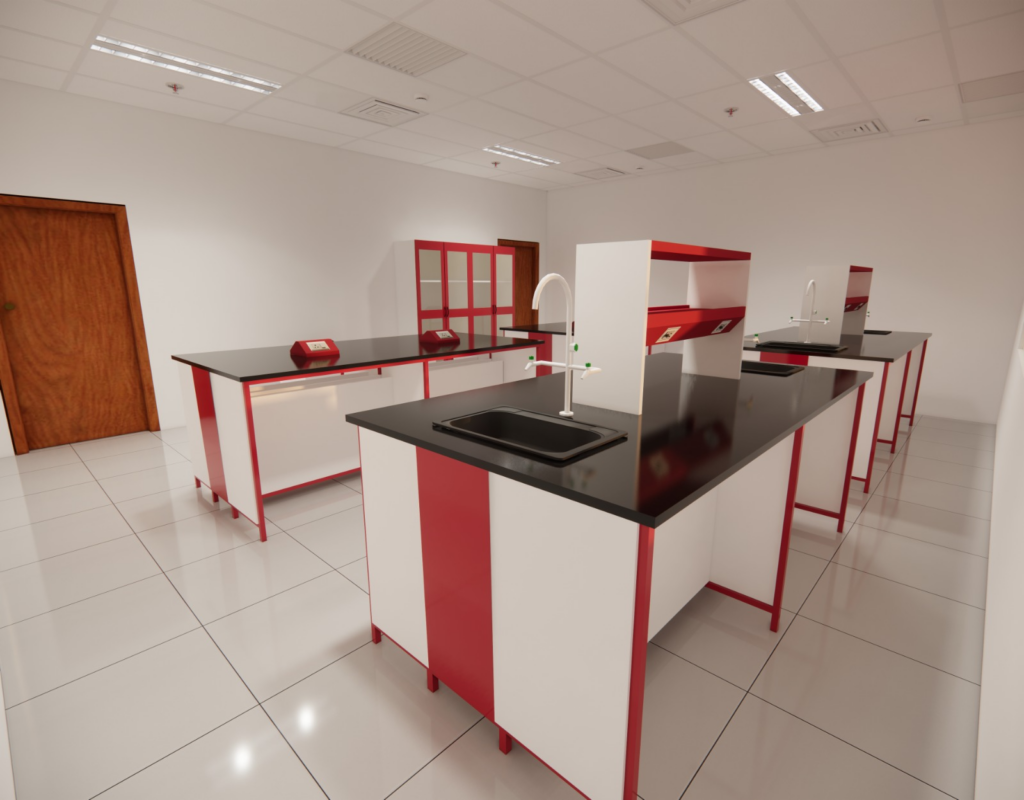
A composite lab is a blend laboratory setup that accommodates practical activities for science labs that includes Physics, Chemistry, and Biology within a single, well-organized space.
Rather than dividing infrastructure into separate rooms, a composite lab integrates:
- Modular lab workstations
- Shared utilities like sinks and gas lines
- Organized storage systems
- Safety equipment
- Multi-purpose demonstration areas
This setup ensures that students can conduct diverse environment while maximizing their infrastructure investment.
Why are schools choosing Composite Labs?
Many Schools, especially in urban areas, operate within limited campus space. A composite lab eliminates the need for three separate laboratories and consolidates resources effectively. The intuitions have budget allocation is a major consideration for schools. Setting up and maintaining three separate labs often increases capital and operational expenditure.
Under the framework, national Education Policy (NEP 2020) promotes holistic and integrated education. Composite Labs naturally support this vision by enabling students by understanding connections, perform multi-subject’s experiments, and developing analytical and problem-solving skills.
What are the steps to setting up a Composite Labs in 2026?
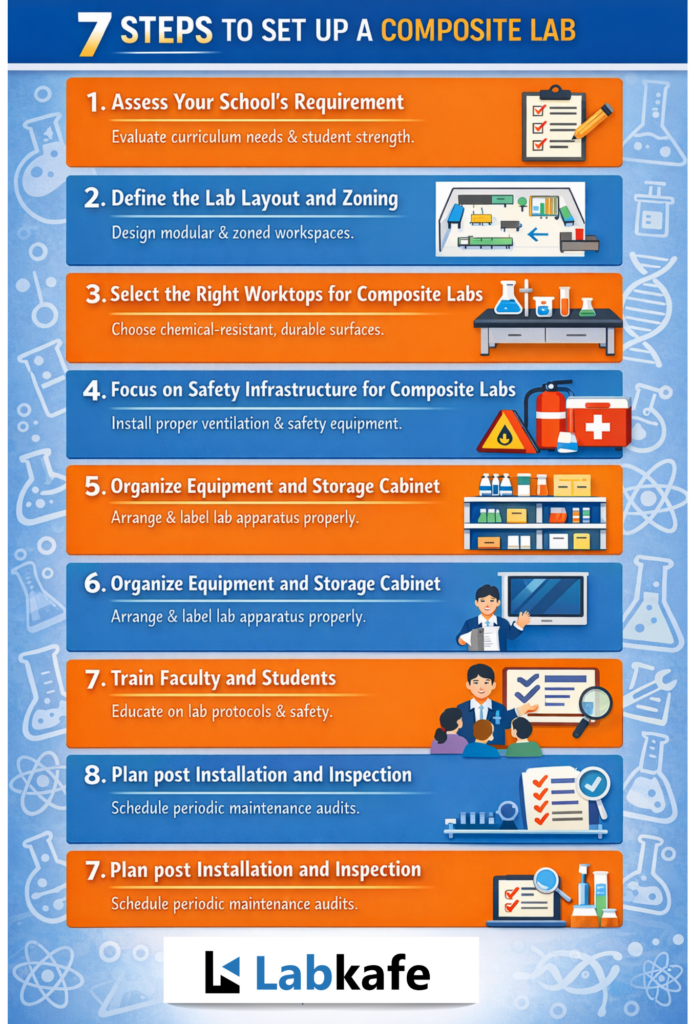
Labkafe has 7-step process by which the clients can easily place orders and the smooth installation process to establish composite labs. Here is a step-by-step process, from planning to installation.
Step1: Assess Your School’s Requirement
Before contacting us, collect all the internal requirements:
- Students’ strength per batch
- Available floor area
- Classes to be covered (secondary or higher secondary)
- Utility access
- Budget allocation
This will ensure that the composite lab designs match both your academic needs and physical allocation
Step 2: Define the Lab Layout and Zoning
A composite lab integrates Physics, Chemistry, and Biology in a space. Proper zoning is critical.
Your layout should ideally include:
- Physics workstation
- Chemistry Workstation
- Safety Cabinets
- Demonstration Table
- Storage Cabinets
- Safety Gears
- Gasline and electrical wiring
A professional layout of 2D or 3D will be created by our operation team based on the classroom dimensions to ensure smooth movement and safety standards.
Step 3: Select the Right worktops for Composite Labs
However, furniture determines durability and safety. In a composite lab, the furniture must withstand experimental conditions. The wide variety of worktops includes:
- Cold Rolled Close Annealed (CRCA)
- Stainless Steel
- Ergonomic design
- Gas station & electric wires
- Proper Sink Units
Modern manufacturers such as Labkafe offers modular lab furniture solutions designed for composite labs. Modular designs allow easy reconfiguration as curriculum needs evolve.
Step 4: Focus on Safety Infrastructure for Composite Labs
Safety must be integrated from day one. Your composite lab should include:
- Fire extinguishers and fire blankets
- First-aid kits
- Proper ventilation Systems
- Chemical storage cabinets
- Emergency exits
Electrical points must be insulated and strategically placed. Furthermore, respected lab infrastructure providers conduct safety-focused planning to minimize risks and ensure compliance.
Step 5: Organize Equipment and Storage Cabinet
A well-set composite Lab avoids clutter. Categorize equipment for smarter combination that enhance student engagement and support by hybrid learning. However, tools like voltmeter and Compound microscope helps the teachers to demonstrate complex concepts more easily.
Using vertical storage and full storage cabinets to maximize space. Maintain an inventory management system to track usage and reduce wastage.
Step 6: Train Faculty and Students
For using the modular Integrated Lab, schools must conduct structured training for teachers to train them to deal with a new environment. Therefore, they will guide the students with right lab equipment, safety guidelines, and procedures.
Furthermore, students should also receive a proper training on laboratories’ behavior and decorum. Clear instructions on chemical usage, electrical precautions, and emergency exits.
Step 7: Plan post Installation and Inspection
After the installation, Maintenance is essential for the longevity of any lab. However, schools should regular inspection of plumbing systems prevents leakage issues, while routine electrical checks reduce safety risks.
Benefits for Schools & Teachers
Nevertheless, composite labs offer significant advantages for schools by optimizing infrastructure and improving resource utilization. Instead of investing in separate laboratories for Physics, Chemistry, and Biology, institutions can integrate all three disciplines into one well-structured space. However, this efficient model enhances operational management, reduces maintenance expenses, and strengthens the school’s academic reputation. However, a modern composite lab also reflects a commitment to experiential and competency-based learning, making the institution more future-ready and aligned with evolving education standards.
For teachers, composite labs create a more dynamic and flexible teaching environment. Furthermore, teachers can supervise students more effectively and conduct practical sessions with greater confidence. However, the improved workflow reduces preparation time and enhances classroom control, ultimately helping educators focus more on delivering.
Conclusion
Setting up a composite lab in 2026 is a strategic step toward building a future-ready academic environment. However, a well-designed composite lab will enhance student engagement and also empower teachers to deliver practical education with confidence and efficiency.
If you are planning to establish or upgrade your composite lab, now is the right time to partner with experienced laboratory solution providers like Labkafe. Contact our lab experts to design a composite lab at your school today!






Leave a Reply