Table of Contents
- What is an Integrated Science Lab?
- Purpose and value
- Key features of an Integrated Science Lab
- How does an integrated lab helps School and Educators?
- Impacts on Student learning
- Conclusion
In today’s growing diversity in the academic field, schools are going beyond the traditional subjects. The future generation is moving towards interactive and resourceful learning environments. The integrated science lab represents this shift by combining physics, chemistry, and biology into a single planned lab.
In this blog, we will cover the important features and impacts on students of the Integrated Science lab. Designed to promote interdisciplinary learning, the lab supports conceptual clarity, and practical exposure. Therefore, making it an ideal solution for schools.
What is an Integrated Science Lab
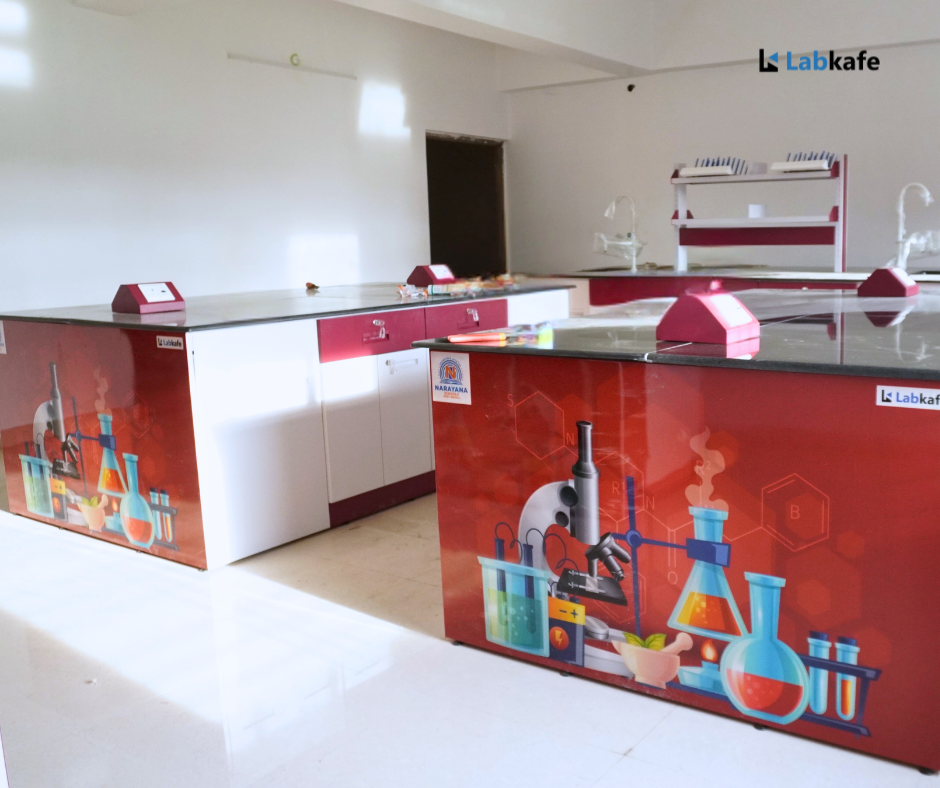
An Integrated Science Laboratory is a single and multipurpose utility that combines both the equipment and workstations in Schools. The laboratory is combined with Physics, Chemistry, and Biology allowing students to explore science through practical learnings. These activities range from simple experiments to advanced projects, helping students clearly understand and strengthen core science concepts. It is mainly effective in middle and secondary school levels.
The composite labs involve the enhancement of the student’s motivation through interactive, project-based, practical learning, and skill development. However, these labs are aggressively increasing, aligning with the modern secondary education. Even with numerous challenges related to cost and peace, the labs are crucial for shaping the future minds by promoting various activities.
Purpose and value of Integrated Science Lab
An Integrated Science Lab is also referred to as “iLAB”, which represents a modern and digitally connected environment where various equipment, software, and data sources are aligned in a single lab.
However, the primary purpose of a composite lab is to remove the traditional way of learning, paper-driven processes and replace even-driven workflow. Although many challenges don’t belong to a single discipline, they require knowledge from multiple branches of science. This lab encourages students to think beyond subject boundaries, evolving analytical skills, curiosity, and problem-solving skills.
Key features of an Integrated Science Lab
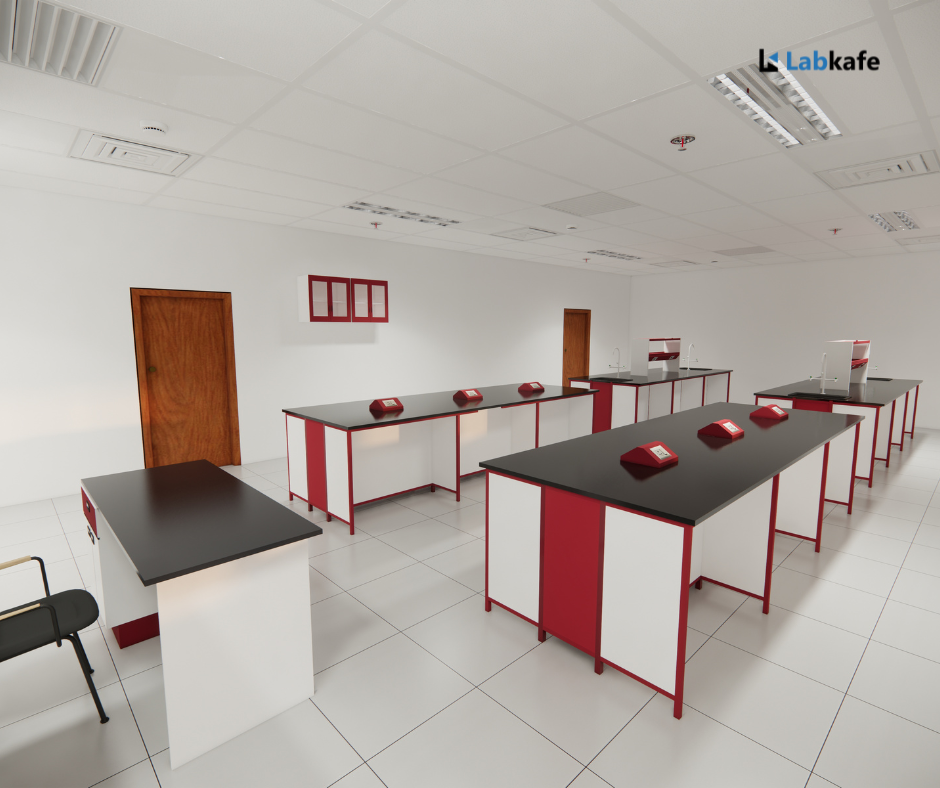
A well-designed composite science laboratory builds with modular lab furniture, movable workstations, and common facilities that make safe for wide range of experiments.
Multi-utility workbenches in a composite lab
The workbench of the combined laboratory is designed to support both dry and wet experiments, including physics, chemistry, and biology activities. This lab furniture is topped with chemical-resistant, heat-proof materials like epoxy. And, these are also very sturdy enough for heavy physics apparatus.
Modular Furniture and Flexible Workstation
A well-equipped integrated science laboratory is built with modular lab furniture and flexible workstations that support environments across multiple subjects. Furthermore, it helps the teachers to interchange the lecture form classes to small practical bunch. Furthermore, the flexible configurations allow to optimize space while accommodating varying class sizes and teaching methods.
Centralized storage and Organized Cabinets
Labkafe’s storage cabinets are the backbone of an integrated science lab. And, the cabinets provided for storing apparatus, reagents, and scientific models with full height cabinet. These glass cabinets ensure easy access and smooth laboratory workflows.
How it helps School and Educators?
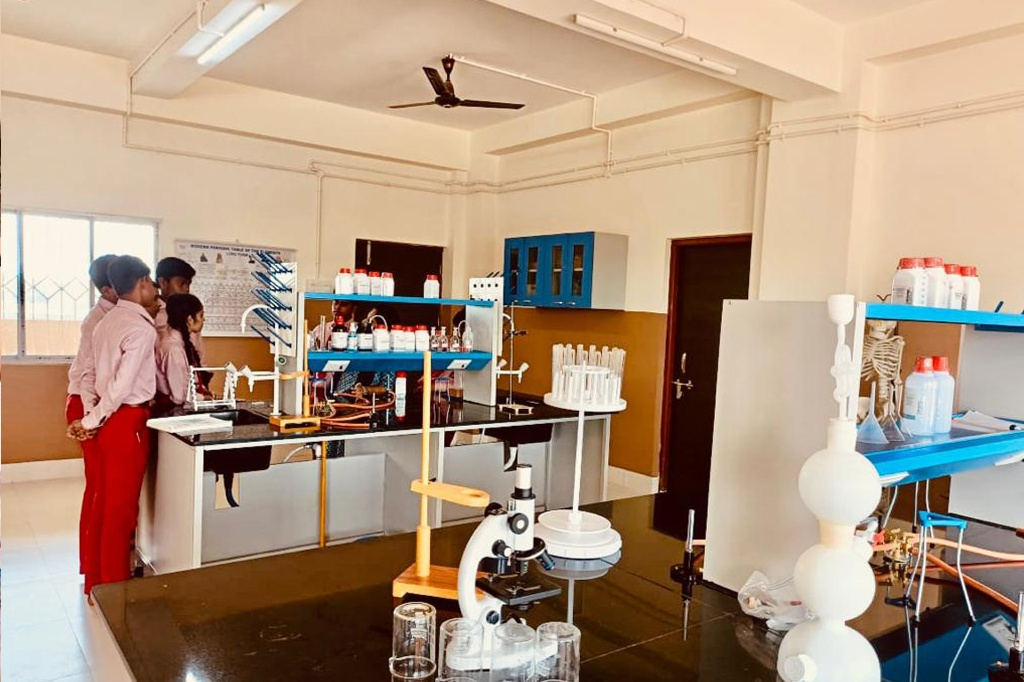
It offers multiple advantages for the schools, especially with the budget, space optimization, and easy learning.
Cost-effective and storage Optimization
Integrated science lab offers significant advantages for schools, particularly those working within space or budget constraints. Moreover, newly established schools, while setting up a lab, can reduce their initial setup costs while minimising long-term maintenance and operational expenses. Furthermore, over time, damaged laboratories can be renovated and cost-effectively to create an improved, engaging space for interactive learning in schools.
Flexibility in teaching in an integrated lab
In some situations, a biology lesson on osmosis may lead to a question of fluid dynamics in physics. Then these labs help the teachers to get the space and the instruments to explain the concept immediately. Therefore, it helps students understand the practical application of theoretical knowledge.
Enhancement of interactive learning
The learners don’t just watch the real-time demonstrations together but also actively participate in the experiments. Furthermore, Labkafe provides high-quality, age-appropriate materials that reinforce the classroom concepts.
Impacts on Student learning
Labkafe’s combined lab approach directly impacts student engagement. When students work in a well-designed lab, in a flexible environment, they develop better imagination and a conceptual foundation. Moreover, hands-on experience builds confidence, improves observational skills, and deepens scientific knowledge.
Moreover, it encourages skills like teamwork, analytical, and communication, which often work in groups to conduct the experiments and the results.
Conclusion
The Integrated Science Lab is more than a room; it is a cost-effective and strategic step for the upcoming generation. And, by combining multifunctional facilities and modular design, schools can provide a perfect balance between functionality and academic development.
Create your modern science lab today! that supports better learning and optimizing storage. Contact our lab experts today!










Leave a Reply