Table of Contents
- What is a Fume cabinet?
- Why Fume Cabinet Safety Matters in a School?
- Top Tips for Using a Fume Cabinet In a School
- How Labkafe Promotes a safe learning environment with a Fume Cabinet
- Conclusion: Strengthening safety Culture in schools
The school laboratory environment plays a vital role in shaping students’ scientific concepts and practical skills. However, the safety of the labs will remain the highest priority. A Fume Cabinet is designed to protect users from heavy, hazardous fumes, vapours, and harmful particles. Inhaling intoxicated fumes is undesirable, considering the many health hazards, such as lung cancer. In this comprehensive guide, we will cover all the corners of the safety instructions and hurdles of working with a Fume cupboard, ensuring the procedures and laboratory settings.

What is a Fume cabinet?
A fume cabinet, also known as a Fume hood, is a ventilated enclosure used in labs specially engineered to limit fumes. The fumes generated in the labs are toxic or hazardous when inhaled. To prevent these fumes from entering your lungs, fume cupboards act as a safety barrier, pulling contaminated air away from you. It uses either filters or exhausts the polluted air away from the breathing zone outside the building, protecting the users of the schools.
Why Fume Cabinet Safety Matters in a School?
Fume cabinets are an essential safety element in laboratories, especially in schools, protecting personnel from developing diseases due to exposure to hazardous fumes. In the year 2025, safety becomes an essential in any laboratory to assess the functionality.
Pre-check safety before using
After installing the Fume Cabinet, it has to go through some safety checks to ensure optimal performance and protection. The check begins with the optimal presence of visible calibration, which confirms the hood has been recently performing tests. Ensure the exhaust blowers or filters are functioning efficiently and the airflow is within the safe velocity range. Also, confirm the hood baffles are not obstructed for airflow, and no air diffusers are positioned nearby.
Safe Operating Practices
The performance of a fume hood is determined by its adherence to operating criteria:
- Sash: Combination-type sash using 5mm toughened glass in an aluminum frame, counterbalanced for smooth and safe movement.
- Air Foil: Aerodynamic “Flip-On” design crafted from a 2mm-thick PP sheet for proper airflow at the hood base.
- Fume Extraction System: Silent TEFC motor with SISW centrifugal fan (3mm PP with 2mm FRP lining), corrosion-resistant, high-efficiency, wall- or terrace-mounted. Includes 16A, 3-phase MCB.
High-Performance Fume Cabinet
Schools should invest in high-quality fume cabinets designed to meet international safety standards. Modern laboratories use high-performance fume cupboards that provide advanced airflow control, reduced energy consumption, and efficient fans for stable performance. This ensures durability, consistent ventilation, a nd reliable protection for both students and staff members.
Top Tips for Using a Fume Cabinet In a School
Here are the 10 most important tips for using a fume cabinet in a school laboratory safety.
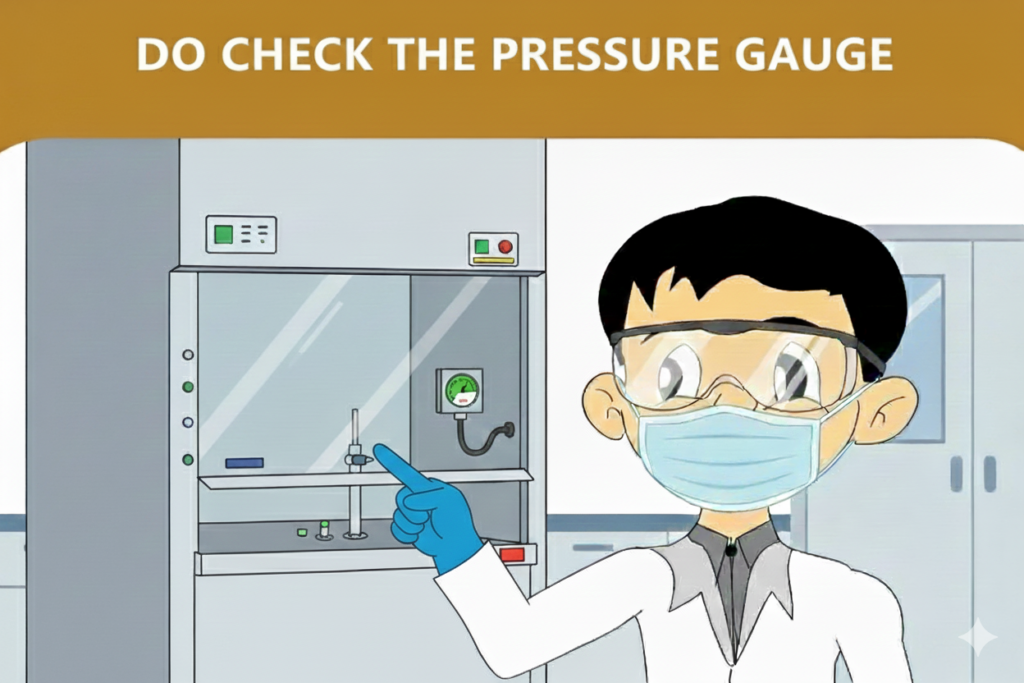
1. Do check the pressure gauge
Lab furniture, such as a Fume cabinet, operates 24/7, except during scheduled maintenance and breakdowns to the lab channel. Always confirm that the pressure gauge indicates normal airflow before setting up your experiments.
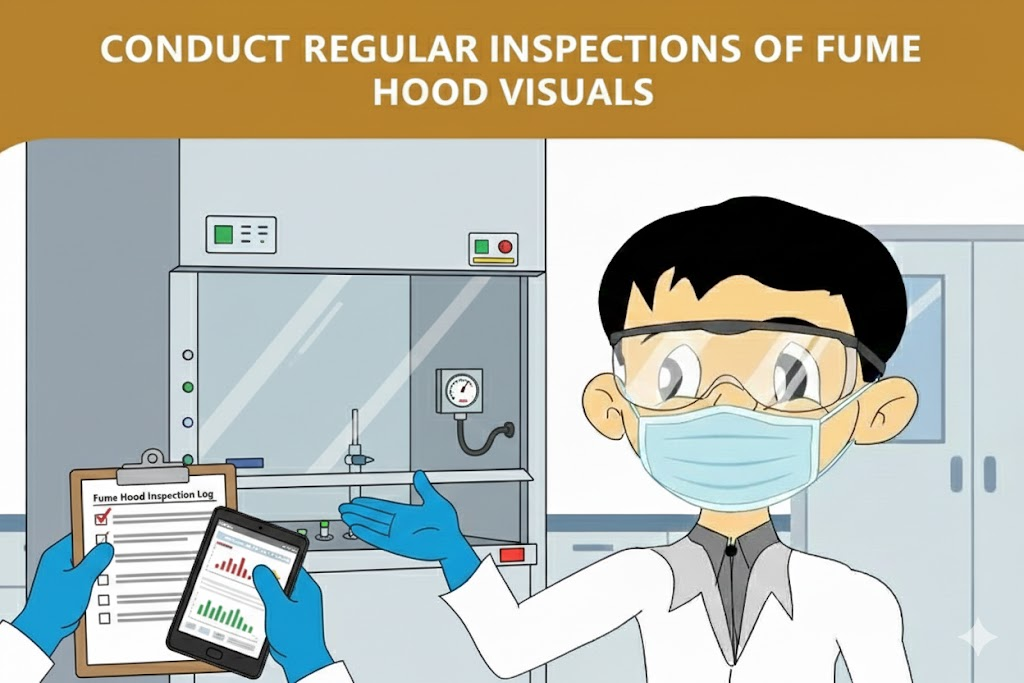
2. Conduct Regular Inspections
The Fume closet should undergo a certified inspection annually by a renowned professional. The staff and teachers should perform a quick visual check before use.
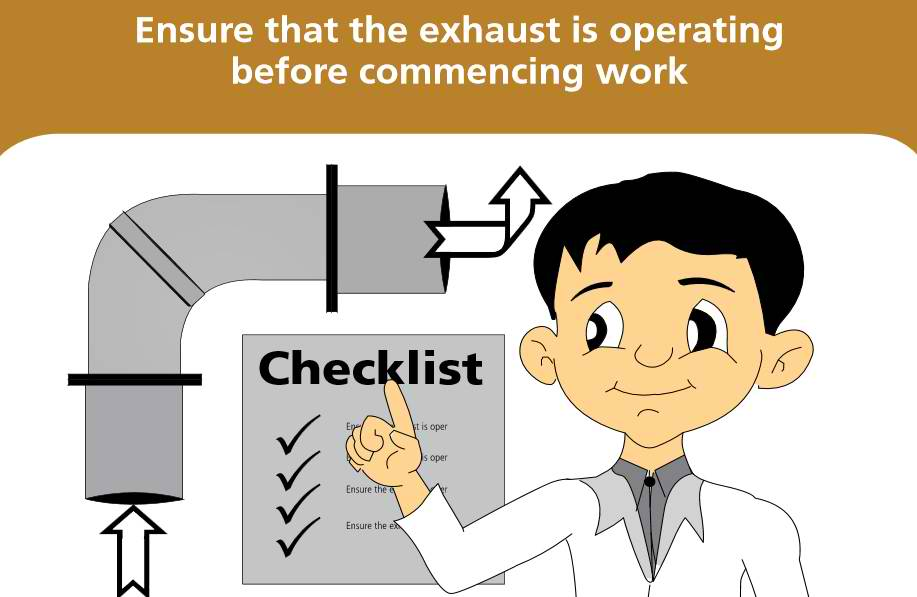
3. Maintain Proper Airflow
Do not try to block the vent at the back of the fume hood with any chemicals or equipment. Without maintaining a proper airflow, it may not capture hazardous gases effectively.
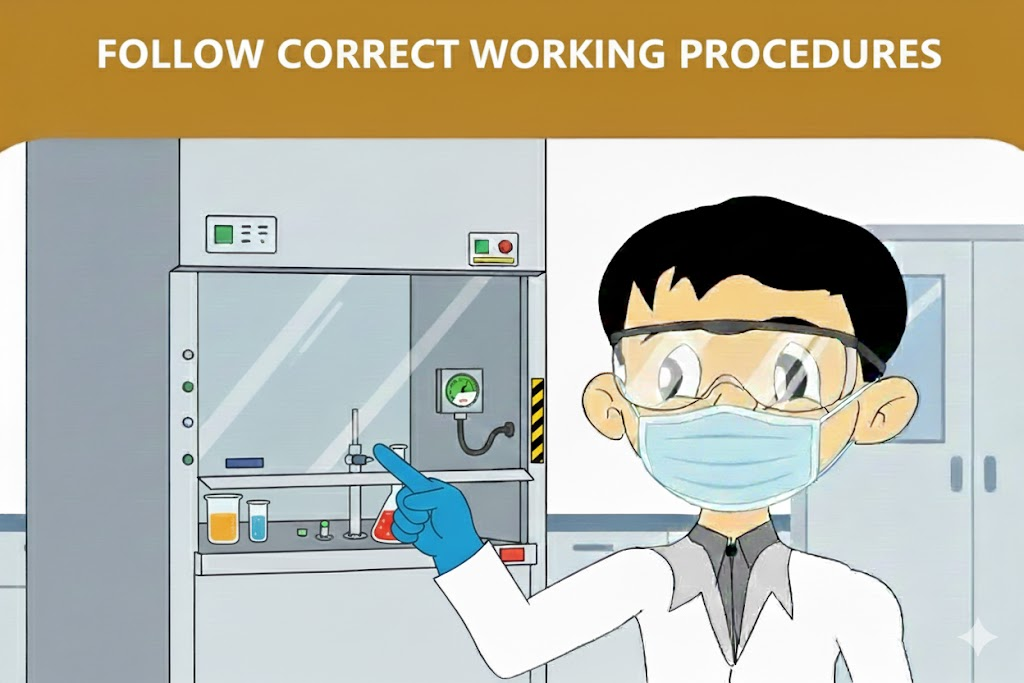
4. Follow Correct Working Procedure
All the users, whether they are students or teachers, should be trained on the proper sequence. So that they can turn it on, conduct the work, and turn it off without any harm.
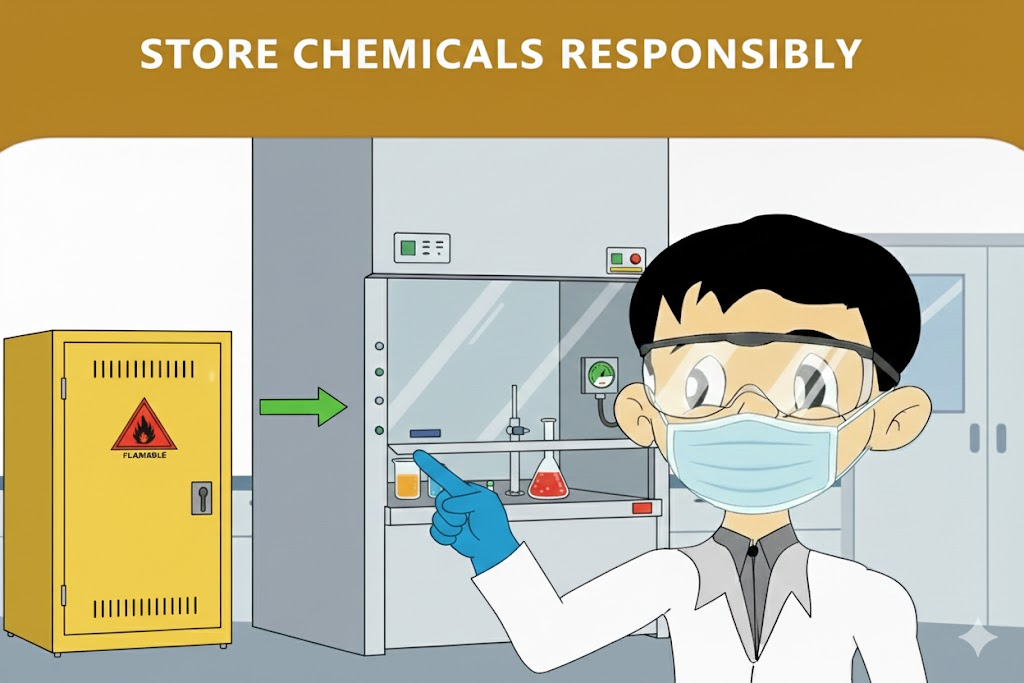
5. Store Chemicals Responsibly
Try to keep a minimum amount of essential chemicals inside the cabinet. When storing the chemicals, place them at least 6 inches behind the airfoil. And ensure the containers are capped and not obstructing the vent airflow.
6. Wear Your PPE
Even when you are handling hazardous fumes or any technique inside it, wear your PPE. It helps to protect the user from any accidental spray, harmful solution or element.
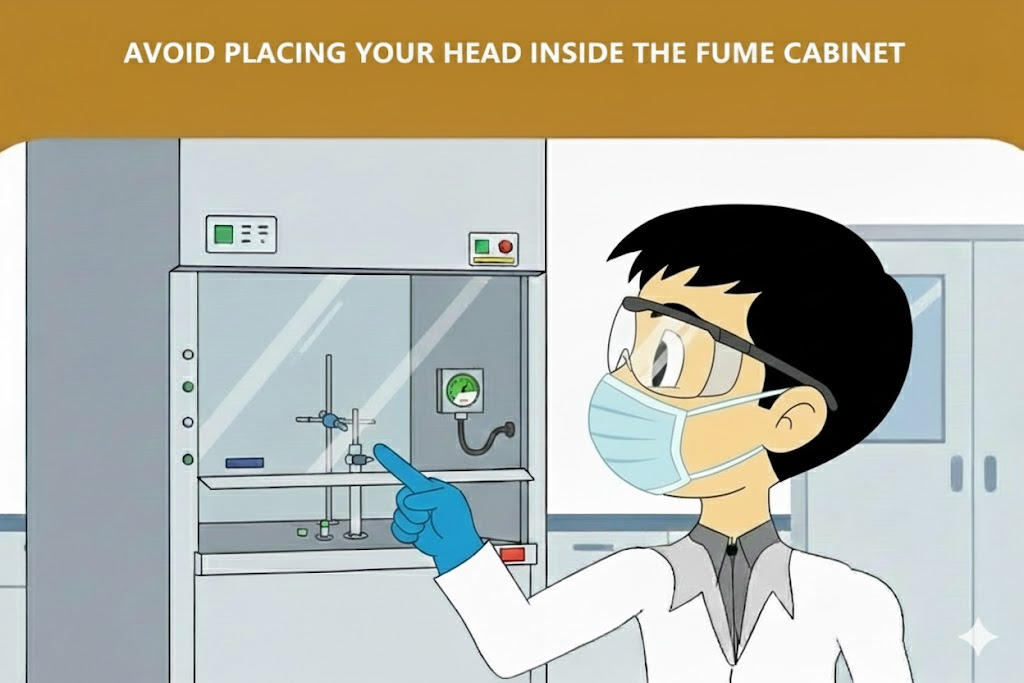
7. Avoid placing your head inside the Fume Cabinet.
Make sure your head never crosses the plane of the sash. The airflow is designed in such a way that it pulls away from the opening and into the exhaust system, keeping the air you breathe safe. By keeping the head outside, you ensure you are not inhaling any hazardous escaping vapors.\
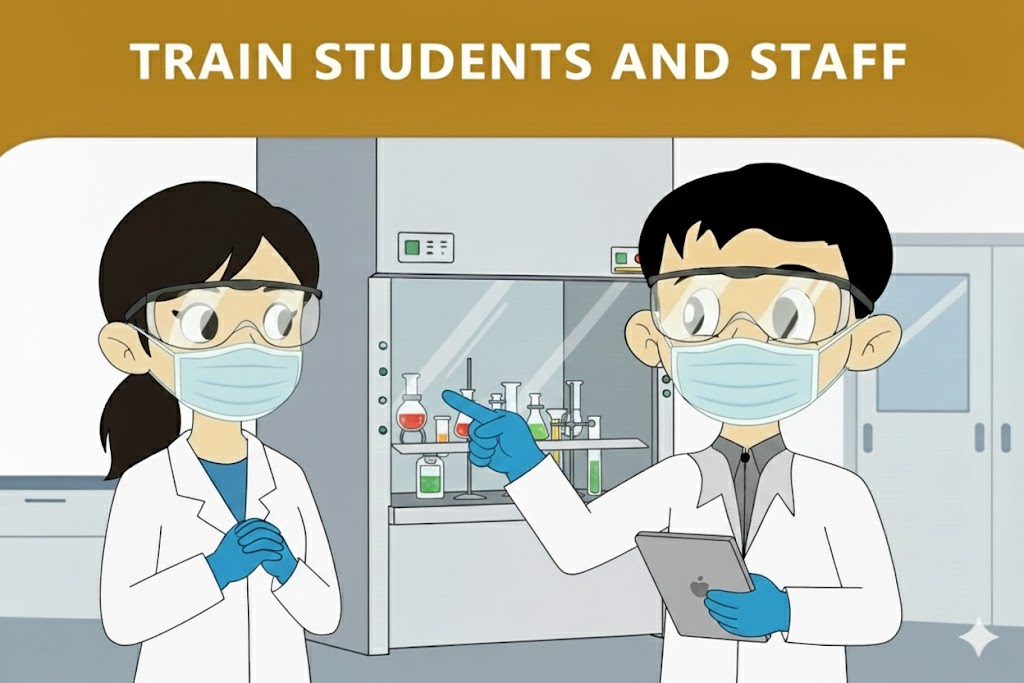
8. Train Students and Staff
Before starting any active work, train the users. Users should know how to pre-check, understand airflow, and correctly operate the sash to do active work.
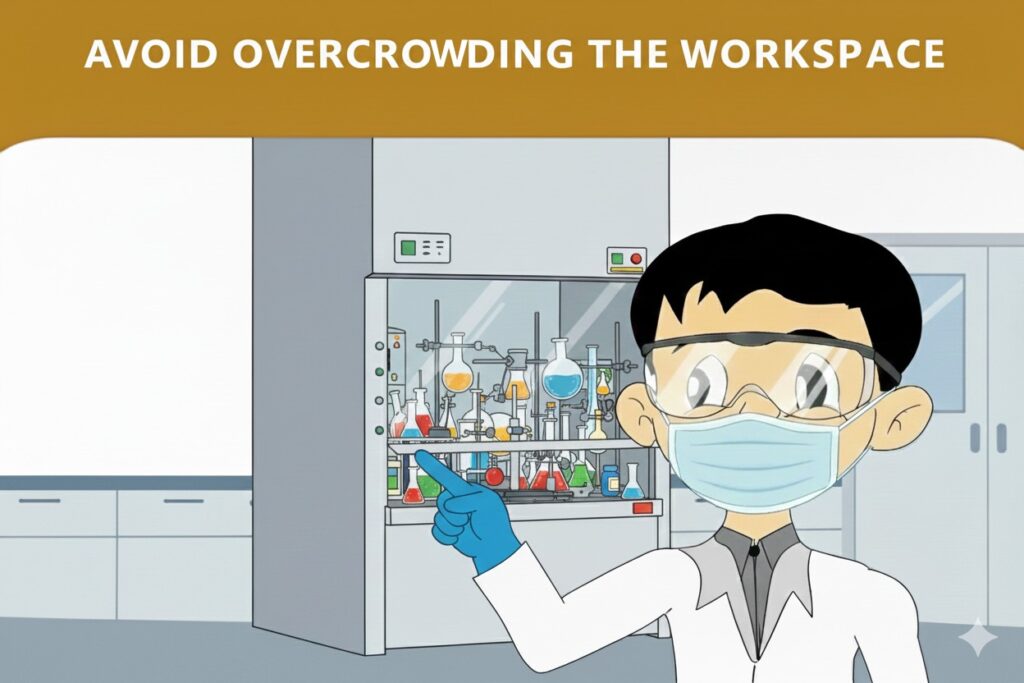
9. Avoid Overcrowding the Workspace
Keep the interior clear of excess equipment and solutions. The interior must be clear to maintain the smooth dynamics of airflow. The experiment should ideally be conducted at least 6 inches inside the sash.
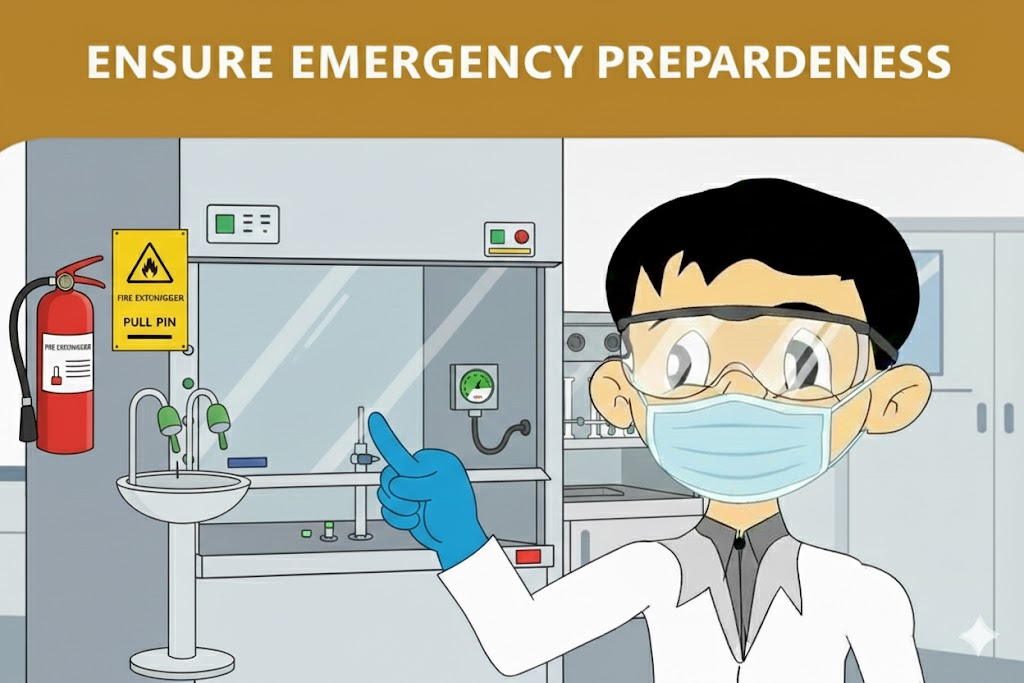
10. Ensure Emergency Preparedness
Install the cabinet near the safety shower, eyewash station, or fire extinguisher to ensure emergency safety. Also, conduct regular training and drills for all staff to test your emergency plans and ensure everyone knows their role during the emergency.
How Labkafe Promotes a safe learning environment with a Fume Cabinet
At Labkafe, we offer premium Fume hoods together with yearly service. Furthermore discussed earlier, the cabinet itself needs to be inspected to ensure all is in order. We will establish a safe learning environment through ergonomic lab furniture, designed for you, while considering safety. We also go as far as creating customized lab layouts to ensure space, proper ventilation, and workflow by sharing expert solutions. By bringing together design, regulatory compliance, and awareness, Labkafe builds a space of science and innovation.
Conclusion: Strengthening safety Culture in schools
A Fume Cabinet is an important element of any wet laboratory. Strengthening the culture around the fume cabinet for protecting the students and staff from hazardous gases. A vigorous safety program, grounded in consistent training and adherence to protocols, is essential. So, Labkafe came up with the most affordable Fume Cabinet for Schools under clear guidance, ensuring proper functionality and installation. This collective responsibility not only prevents accidents but also reinforces ideal safety skills.
Explore our Labkafe’s service to avail India’s most affordable Fume hood for schools and research institutions.






Leave a Reply