Table of Content
- What are Fume Hoods?
- What are Ducted Fume Hoods?
- What are Ductless Fume Hoods?
- Ducted vs Ductless Fume Hood
- Final Thought
When setting up a laboratory, safety should always be the first priority. There are wide range of experiments that involve chemicals that release fumes, vapors or dust. Therefore, in every lab there should be fume hoods to protect the users and maintain a safe environment, laboratories rely on fume cabinets.
Among the different options available, the two most common types are ducted fume hoods and ductless fume hoods. In this blog, you will get the overall information on which one is right for your lab.
What are Fume Hoods?
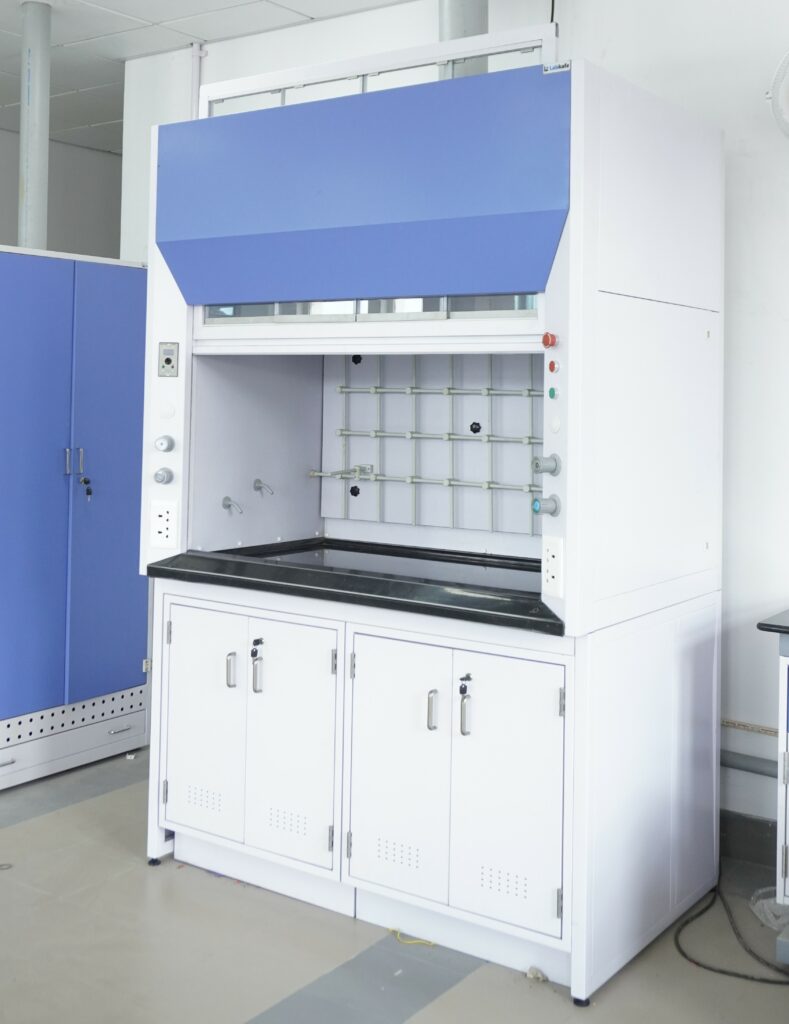
Fume Hoods are ventilated enclosures designed to capture and remove any hazardous fumes, vapours, and particles generated during laboratory work. However, it helps to protect lab users from inhaling dangerous chemicals and keeps the lab environment clean.
Basically, it is just a large box on the top of a workstation. It consists of a large door or shutter at one side and may or may not have glass or CRCA sheet walls on other sides. However, in some cases if ant dangerous kind of experiment to an audience on top of an island-type lab table, then you have the requirement of an island-type lab table.
What are Ducted Fume Hoods?
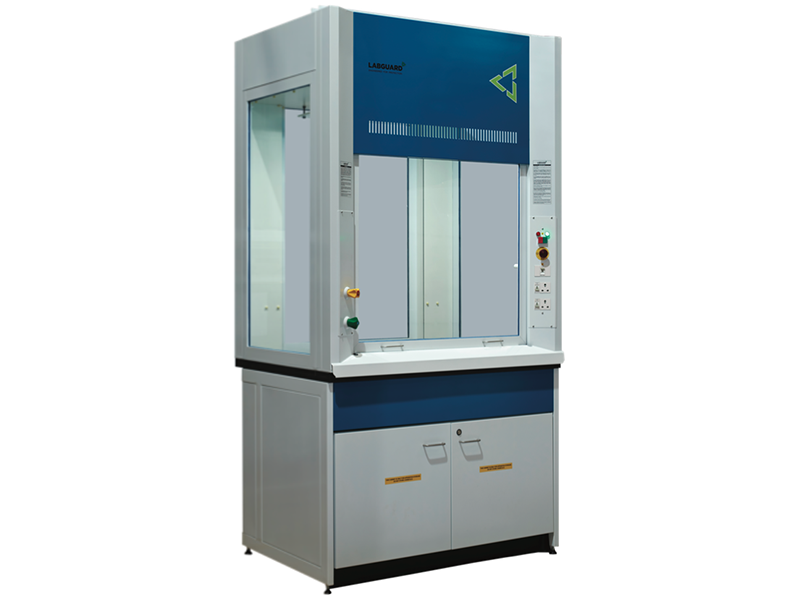
Ducted Fume hoods are ventilation system with have the major function of exhausting chemical fumes, vapors, gases and mist. However, its secondary function is to work as a physical barrier for providing the operator protection from chemical spills, splashes, exposure, rum-away reactions, etc.
Key Features of Ducted Fume hood
There are several features of Ducted Fume hood that are mentioned below:
- External Ventilation System: Ducted Fume hoods are connected to a duct system that carries contaminated air out of the laboratory and releases it safely outside the building.
- Continuous Airflow: These hoods maintain a steady airflow that pulls harmful fumes and vapors away from the user during the experiments.
- High Chemical Handling Capacity: They handle strong, toxic, and corrosive chemicals effectively, making them suitable for advanced research and industrial laboratories.
- Durable Construction: These are typically constructed with chemical-resistant materials, i.e., epoxy resin, stainless steel, or coated steel to withstand harsh laboratory environments.
Advantages of Ducted Fume Hood
- High Level of Safety: Ducted fume hoods remove hazardous fumes, vapors, and gases by exhausting them outside the building. This significantly reduces the risk of exposure for lab users.
- Suitable for Hazardous Chemicals: They are ideal for laboratories that work with toxic, corrosive, or volatile chemicals, making them commonly used in research, industrial, and chemical labs.
- Continuous Airflow Protection: Ducted system maintains a constant airflow that effectively captures and removes harmful contaminants during experiments.
- Reliable for heavy Laboratory Work: These Cabinets handle large volumes of chemical fumes and support laboratories where experiments are performed frequently.
Limitations of Ducted Fume Hood
- Filters need regular replacement
- Not Suitable for all chemicals
- Limited Capacity for high concentrations of toxic fumes
- It requires significant investment for initial setup, including specialized ductwork, and rooftop exhaust fans.
What are Ductless Fume Hoods?
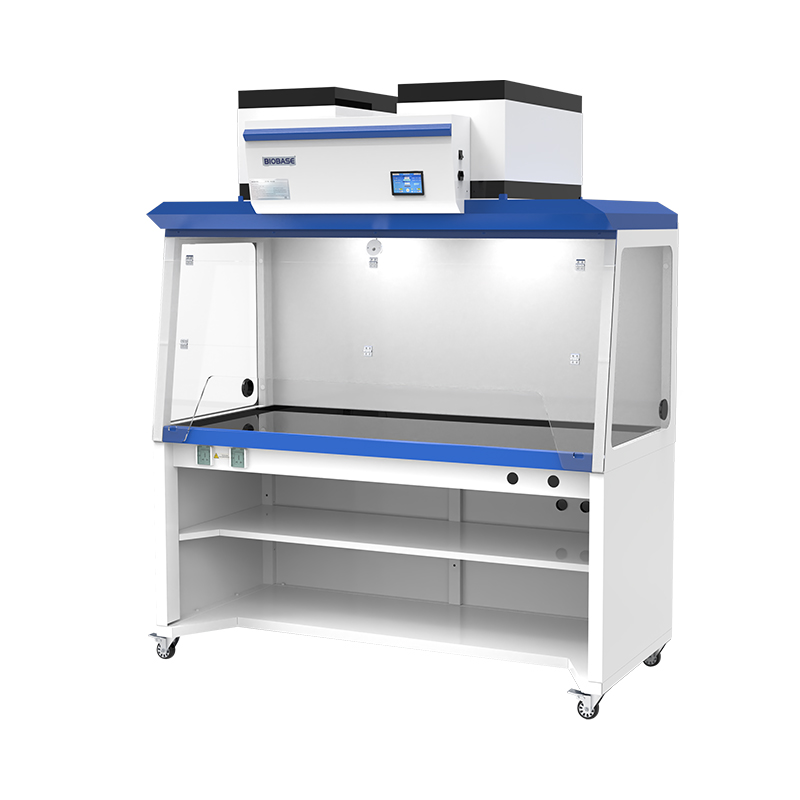
Ductless laboratory fume cabinets are ventilated enclosures with a built-in fan that draws contaminated air through specialized filters and then recirculates the cleaned air back into the laboratory. However, the filters are designed to trap chemical vapors generated inside the hood.
Key Features of Ductless Fume Hoods
There are several features of Ductless Fume hoods which are discussed below:
- Advanced Filtration System: Uses activated carbon filters carbon filters to absorb chemical vapors. However, dust with optional HEPA filters to trap particles
- Mobility and Flexibility: Ductless fume hoods do not require fixed ductwork, which makes installation simple and flexible. You can easily move and reinstall them when shifting or rearranging the laboratory.
- Energy Efficiency: Because they recirculate tempered air rather than exhausting it outside, they significantly reduce energy costs compared to traditional ducted units.
- Airflow Monitoring and safety: Equipped with sensors that monitor face velocity in real-time and provide alarms for low airflow to ensure user safety.
Advantages of Ductless Fume Hoods
- Cost-effective Setup: Since there is no need for ducting or major structural modifications, the initial installation cost is comparatively lower to ducted fume hoods.
- Environmentally Friendly: By filtering and circulating air instead if exhausting it outside. Ductless fume hood help reduce environmental impact and energy consumption.
- Suitable for Light Chemical Work: They are ideal for educational laboratories, research labs, and facilities that handle and produce low to moderate level of hazardous Fumes.
Limitations of Ductless Fume Hoods
- Limited Chemical Compatibility: Ducted fume Cabinet cannot handle all the types of chemicals. Highly toxic, volatile, or large quantities of chemical may not be suitable for these systems.
- Regular Filter Replacement: The filters should be clean that trap chemical vapors and dust to maintain proper performance and safety.
- Filter Saturation Risk: If The filters become saturated or overloaded, they may lose their ability to effectively capture harmful vapors.
- Not ideal for heavy Chemical work: They work best for light to moderate chemical applications. However, it does not support intensive industrial or high-volume laboratory work.
Ducted vs Ductless Fume Hood
| Features | Ducted Fume hood | Ductless Fume Hood |
| Ventilation system | Exhaust contaminated air outside the building through duct | Filters the air and recirculated it back into the laboratory |
| Installation | Requires ducting and a proper ventilation System | easy installation with no external ductwork required |
| Chemical handling | Suitable for strong, toxic, and corrosive chemicals | Best for light to moderate chemical Fumes |
| Maintenance | Fixed installation and difficult to relocate | portable and easier to move within the lab |
| Labs | Research labs, Chemical labs, pharmaceutical labs, and industrial labs | Educational labs, school, and college laboratories, quality control labs, and small research labs. |
Final Thought
Both ducted and ductless fume cabinets play an important role in maintaining safety in laboratories. The right choice depends on several factors, such as the type of chemicals used, laboratory infrastructure, safety requirements, and budget. Understanding the above differences helps you to choose the right one which ideal for the laboratories.
If you are planning to set up a new laboratory or upgrade your existing lab, selecting the right fume hood is essential for safety and compliance. Labkafe provides high-quality laboratory fume hoods, customized lab furniture, and complete lab setup solutions across India.









Leave a Reply